There are several ways to get to the hilltop town of Erice. One is to take a Funivia or cable from Trapani. Another is to take a white knuckle drive and land at one of the town gates. But the third option – the one that is most enjoyable, is to stop partway to the town of Erice at Maria Grammatico’s Cooking School. We took Option 3.
Although her obvious sense of humor belies the tough upbringing that was Maria Grammatico’s early life, the cooking class we enjoyed was among my favorite activites in Sicily. At a very young age Maria Grammatico’s mother, widowed with six children, had to arrange for Maria to be taken in at a local convent. It was while at this convent, Maria, working long hours in the bakery, learned the pasticceria skills that would in her mid-20s allow her to start her own shop, a bakery that is still operating today.
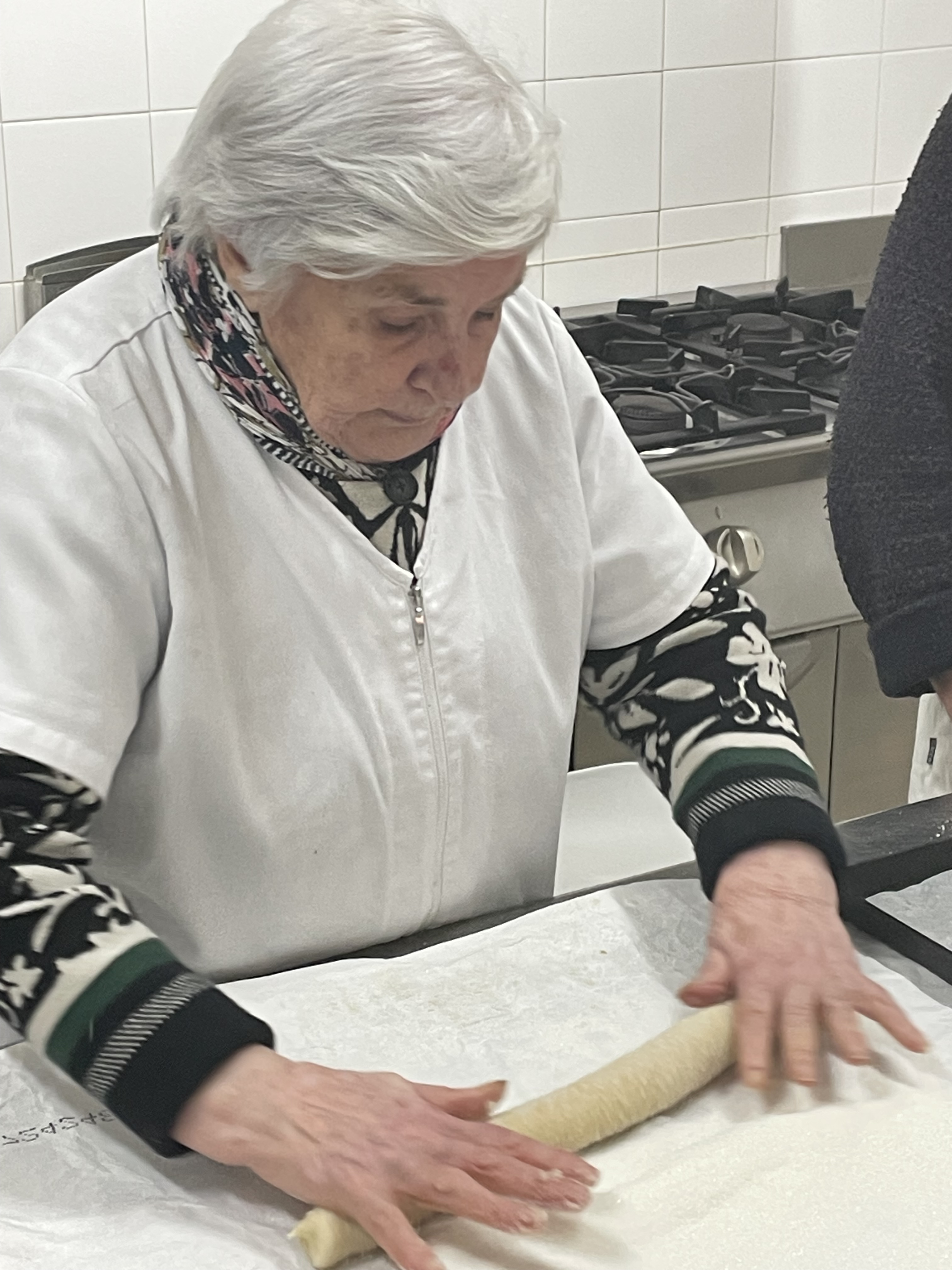
Visiting Maria Grammatico at her cooking school though is a unique blending of experiencing a lunch tasting of local products and a chance to learn to bake from a masterful baker. With a mischievous twinkle, Maria demonstrates Sicilian pastry making, and using her native Sicilian language, she instructs those of us lucky enough to observe her. Our group watched her deftly roll almond dough into tette delle monache, or Nun’s Boobies.
And because no one eats without putting in the work, we all made our attempts to follow Maria’s lead. When we fell short Maria’s mischievous expression and gestures comically corrected our technique. By the end of our cooking demonstration we had two types of almond pastries and cannoli to sample along with some of Maria Grammatico’s almond and citrus liqueurs. If you are going to indulge, this is the place to do it.
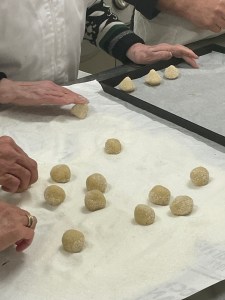
Learning to make Tette Delle Monache
Our desire to consume sweets finally satiated, we reboarded our bus and made our way toward the top of Mount Erice for the town of Erice.
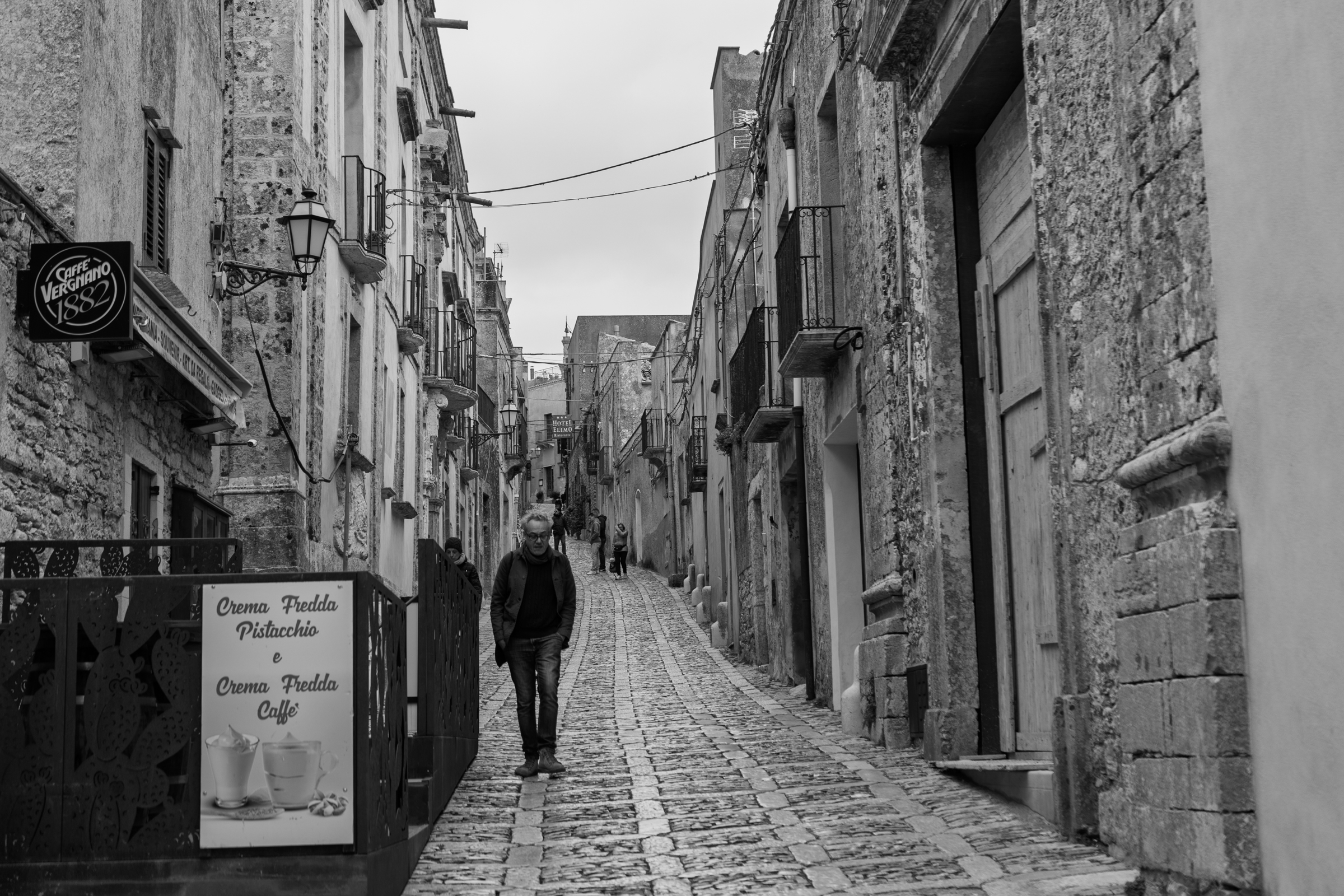
Entering the town through the Trapani Gate, gives the sense that we are observers in another time. Cobbled narrow streets, a steep grade toward the apex of the town, and the stone archways that mark the gates to the town made me feel as if we’d entered a place frozen in the Middle Ages. Maybe we had. One can easily become lost in the labyrinth of narrow streets, alleyways mostly. Defying belief – or maybe sanity – automobiles do drive on these narrow streets and so, we need to be ready to duck into the open doors of artisan workshops and stores to allow them to pass.
Erice was once known as the town of one hundred churches. While that is a definite exaggeration, the town has more churches than one would expect in such a small area. Currently, there are 11 churches in varied states of reconstruction, restoration and disrepair.
But there is more evidence of the strong role Catholicism had on the local population. Embedded into the stone walls, arches and even buildings are shrines and likenesses, and other reminders to honor Catholic beliefs.
As happens in many places, particularly in Europe, the strict practice of Catholicism has waned somewhat. I wonder about the town of Erice, so far up into the hills outside of Trapani that it seems isolated in both geography and time. Does the Church still have the same strong hold here?
Everywhere we have visited so far, the important role of religion has been in evidence here in Sicily. The evidence is in the Doric columns of ancient Greek or Roman temples, in the Duomos of Palermo and Monreale, and here in the town of a hundred churches, Erice.
 After An Educator's Journey