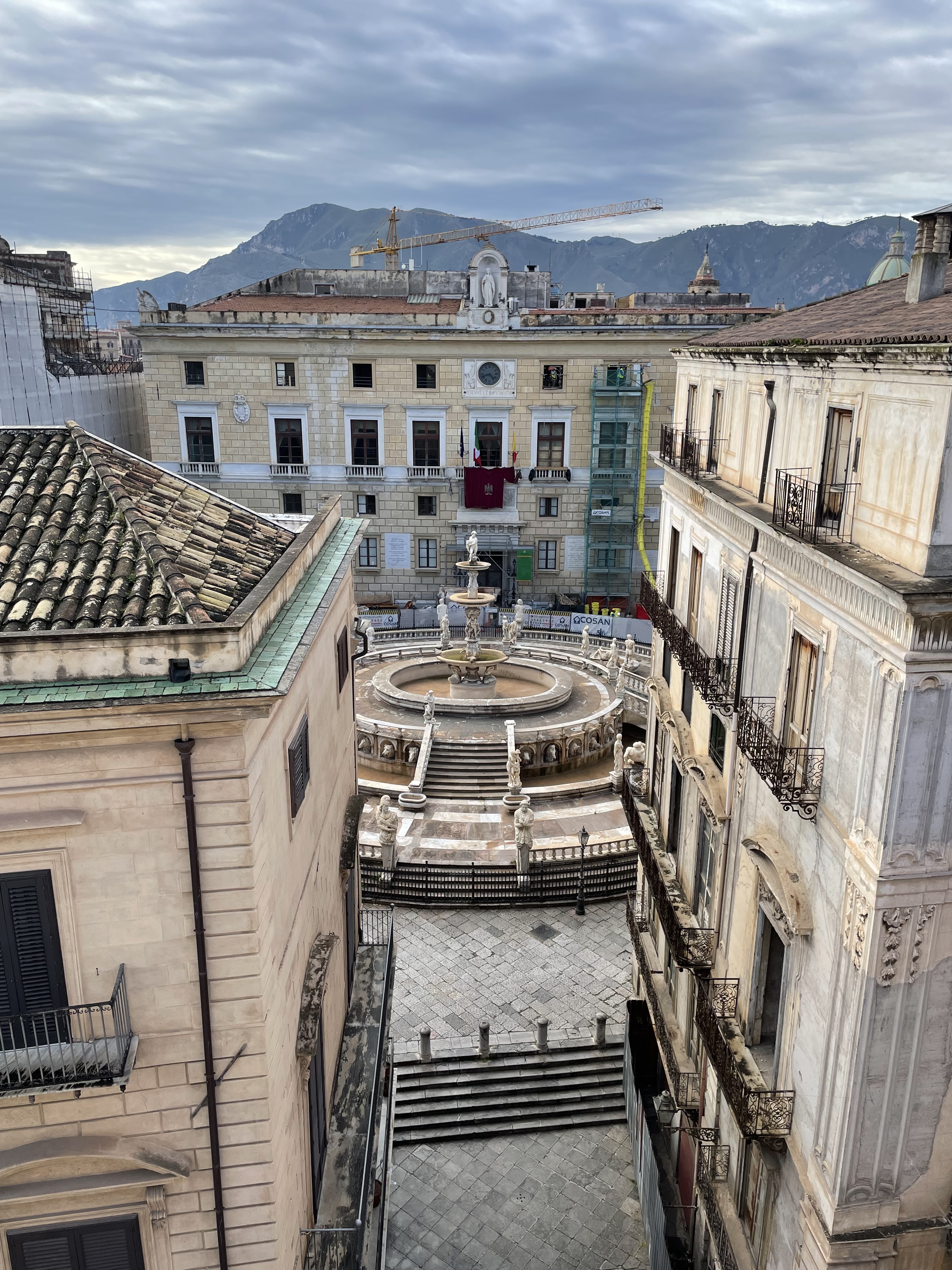
Palermo overwhelms.
The traffic on main thoroughfares is a continual cacaphony of vehicles; motorized scooters appear to travel in packs. To be a pedestrian in Palermo takes some serious awareness skills. Don’t assume. Traffic may or may not look upon street-crossing pedestrians as an impediment to their journey. If there are rules or conventions for pedestrians vs scooter, they are not apparent to me.
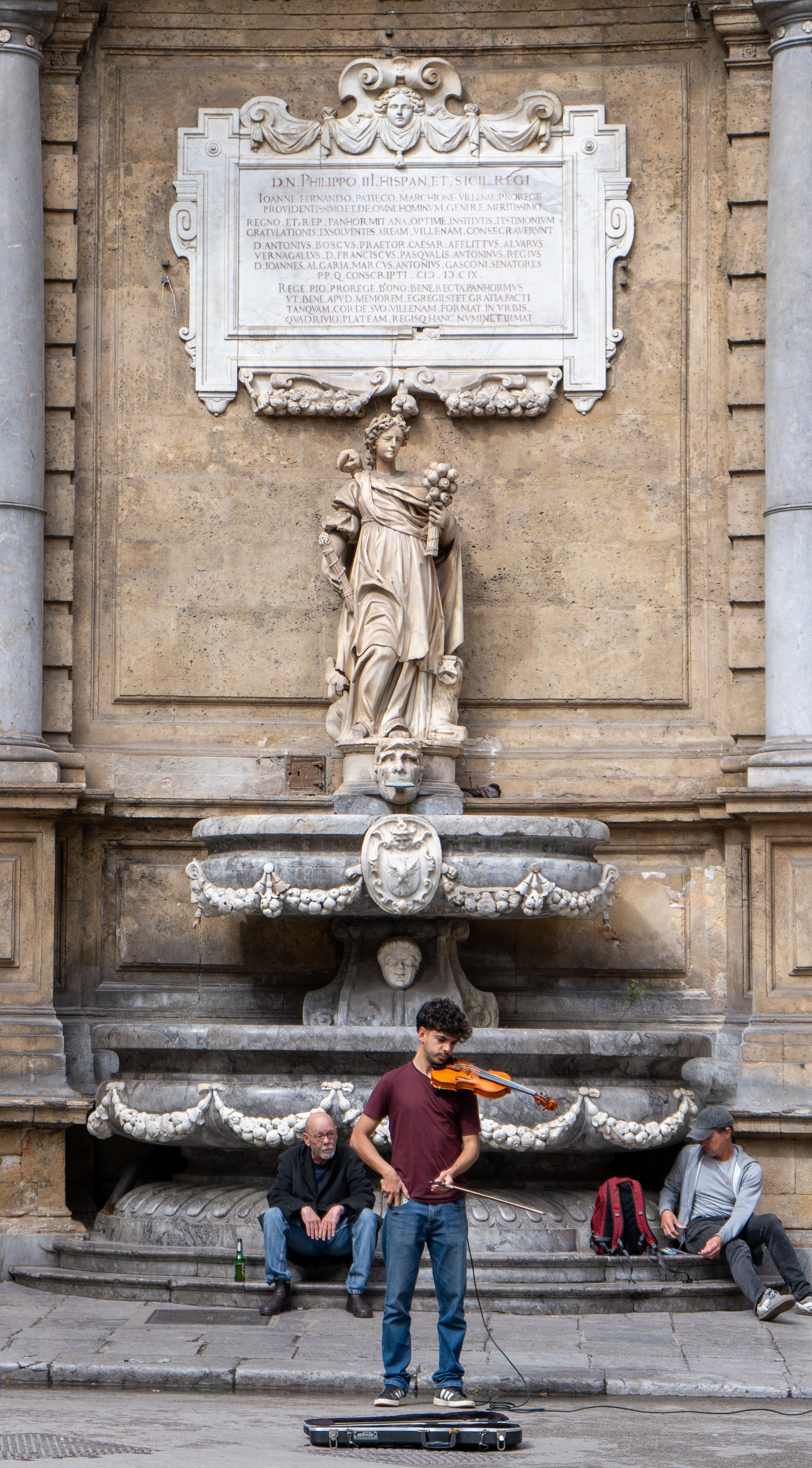
Despite the grit and cacaphony that is Palermo, there is so much to take in, to learn from, and to enjoy. A violinist playing before a gathering crowd, mainly tourists of course, fills Quattro Canti, the Four Corners, with sound.
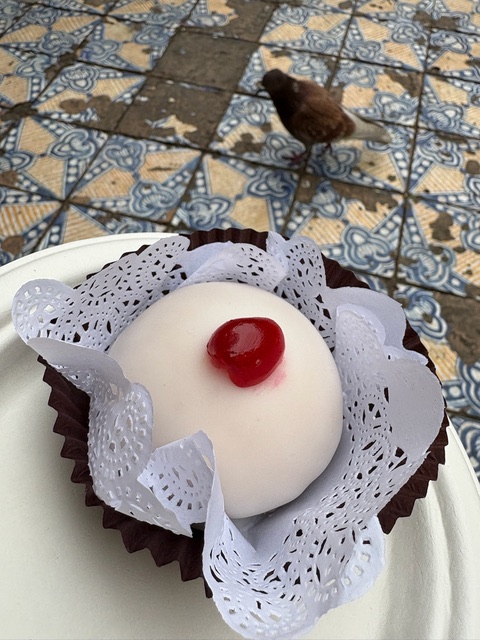
Palermo can be found in the lines of those eager to buy a St. Joseph’s Day Zeppoli or Sfinge at I Segreti del Chiostro, in sitting in a bar or cafe and enjoying a cafe, or with local chefs who work magic with seafood.
Palermo is my introduction to Sicily and its culture. The architecture, the knowledge that the age of Palermo’s buildings is measured in centuries and millennia, not in the decades we cite back home, is never lost on me. What inspired people to live and build here?
Palermo, Sicily’s capital, is an amalgam of the cultures that conquered it: Phoenician, Carthaginian, Greek, Roman, Arab, and Norman, and finally for nearly 700 years, as part of the Kingdom of Sicily. It was part of the Two Sicilies, at least until Garibaldi came with ideas of unification. All of these earlier cultures have influenced Palermo’s architecture and foods, Palermo is my entry point into Sicily’s history and culture. It is where I start learning about my family.
On the second day of our tour, our group convened in the lobby our hotel on Via Roma, and after a quick walk to a bus waiting for us near the Central Station, we board for the ride to Monreale.
Monreale’s centerpiece, the Duomo, sits atop a hill – a stair climb toward the center of the town. The cathedral, started by the last Norman King of Sicily, William II, and it was completed in record time – 15 years.
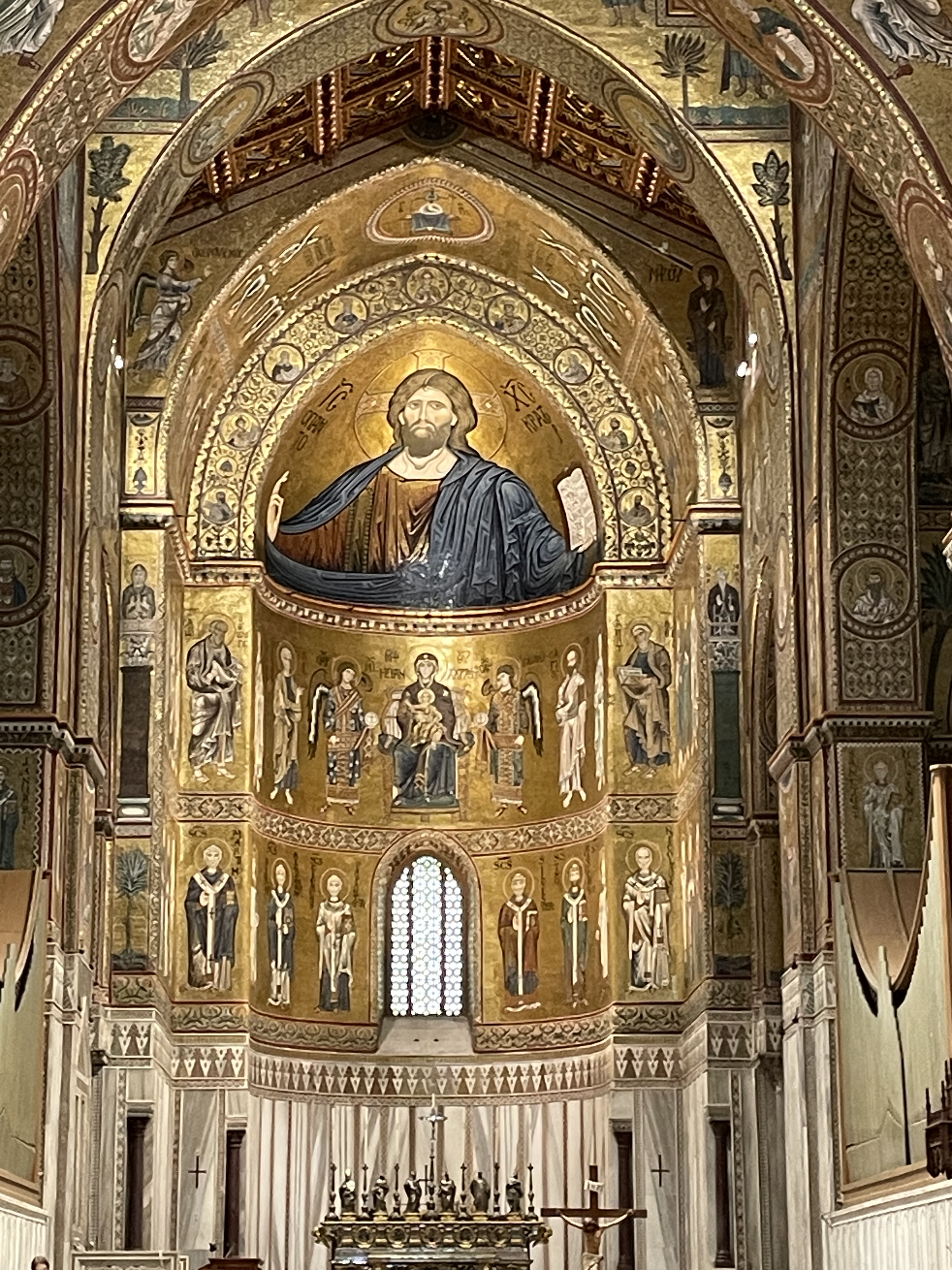
The incredible craftsmanship of the mosaics that line the Nave tells stories from the New and Old Testaments. These are what one comes to see. The delicate design and craft of a diverse team of mosaic artists who were Byzantine, Arabic, Latin and French is made all the more incredible in knowing that this group of artists, whether Christian or not, worked in harmony to create one of the world’s most visited churches.
There is so much to be learned from this part of Sicily and its history. There is the artistic endeavor, of course, but in a world where we no longer seem to be able to agree or disagree with civility, the coming together of such an ethnically diverse group to create Monreale is something for which I have an even greater appreciation.
 After An Educator's Journey