• The only way to make sense out of change 
    is to plunge into it, 
    move with it, 
    and join the dance. 

    ALAN WATTS

    Alan Watts Quotes. (n.d.). BrainyQuote.com. Retrieved January 5, 2024, from BrainyQuote.com Web site: https://www.brainyquote.com/quotes/alan_watts_386511

    This quotation has a particular resonating truth for me.

    No longer able to make sense of the changes in our world politics, a place where right is wrong, care and empathy toward others is oftentimes missing, where there feels as if there is more emphasis on the outrageous, unkind, and vindictive, I’ve often felt as if it would be better for my mental health to just say “The hell with it. Leave me alone.” Even though politically left-leaning, I’ve avoided offending by writing. I’ve self-edited and silenced myself.

    Avoiding changes, leaning away from one’s truth made me feel like an imposter.

    Is avoidance the best response to changes, even if that response comes from one tiny voice in a great big world? By shutting down my true response to uncomfortable changes in our world, my silence may have allowed me to avoid conflict with those who disagree. Doing so, I have not joined the dance. I’ve sat on the sidelines.

    Like a wallflower.

    Lately, with some much overdue perspective from a professional, I’ve been challenged to deal with my discomfort with change and my reluctance to join the dance. And so, this is the first step. I am plunging into changes, moving with it, no longer hiding for fear of committing an offense. Apologies in advance, but then again, I am not sorry.

    I’ve been a listener. Now I need to join the dance.

    ——————————————

    Recently, local news media was all ablaze with the proclamation that third grade students taking MCAS tests last spring were still “underperforming” in reading and math.(see end notes) So last year’s 2023 third grade students, were second graders in 2022, first graders in 2021 and kindergarteners in 2020. What else was going on in their world in 2020 that may have been distracting them from early literacy skills in particular and language acquisition? Oh right, a global pandemic. You know the one where schools were business-as-usual on an early March Thursday and shut down the next day? Teachers and students learned through virtual education for the remainder of the school year. And many classrooms were fully virtual or hybrid for good portions of the following year as well.

    My educational colleagues (I retired in 2015), were inventing how to engage children, very young children, with developing attention spans, sometimes wonky access to technology, and adapting materials on the fly. Not just for a few days, or weeks or a partial year, but for a good number of important learning months. In my view, that circumstance alone is enough reason to question expectations of children whose early literacy experience was so different from “normal”. It is incredibly naive to think there was no negative impact.

    And then let’s talk about how worries about a child’s housing or food security just might have been a distraction. Yup, kids pick up on family dynamics.

    So when I hear people ready to disparage all of education based on a set of test scores from a set of students whose learning was affected by extraordinary circumstances, I wonder what the real issue might be. Certainly journalists, public policy makers, and edu-crats understand that a global pandemic’s effects might have a basis in what happened in the period or years before a high-stakes test. And that the recovery may take multiple years.

    How incredibly discouraging it must be to have come through all of the wild adaptations of 2020, 2021, and have a single assessment deem one “under performing”! Yes, there needs to be a deep dive into what education – including all of the stakeholders – needs to change in order to close the gaps in learning caused by losses incurred during the Covid years.

    That small- and large-scale changes are needed to remediate those learning losses is crystal clear. In 30 years in the classroom, I never met one educator satisfied with the status quo, myself included. There is always a yearning to do better, to ensure that each student’s learning potential is attained, no matter what the subject area.

    Instead of yapping headlines and finger pointing about incompetence, there should always be room for looking at the antecedent – the events that came before – and considering their impact.

    End Notes:

    These 275 Massachusetts schools were identified as needing state assistance or intervention” (Sep 21, 2023)

    MCAS scores are still well below pre-pandemic levels” (Sep 21, 2023)

  • I once heard a description of the stages of travel in retirement as “go-go”, “slow-go” and “no-go”. When I first retired, I know I had many thoughts of traveling domestically and internationally with the added bonus that, as a retiree, I would no longer be bound by the school calendar. Or high travel season prices. We would take advantage of relative good health and high energy and go-go-go.

    As it turned out, the pandemic had another idea. Our travel plans quickly became no-go.

    Like most everyone – young, old, working, retired – we locked down and stayed home. When we did venture away from home, our adventures were close-to-home and within driving distance. Our re-entry into travel has been gradual and slow. But this past week, Adrien and I made a final leap in our pandemic recovery. We went on an airplane.

    It’s been five years since our last plane travel, a 2018 trip to Seattle. Last week we attended a family celebration in Houston. I can attest to an increase in the usual travel jitters when returning to air travel after such a long hiatus. Because several family and friends returned from recent trips with a newly acquired COVID virus, I was acutely aware that the virus is still with us. Deciding to resume air travel came with a maximum of research on whether to wear a N95 mask on the plane or in the airport – both of which I decided to do.

    Air travel has undergone some pretty significant changes over the last five years. Having noted the hassles missed connections caused, I was determined that we would fly non-stop. Worth the extra money to ensure we actually got from point A to point B without sleeping over in a terminal. Picking a ticket price that allowed us to at least carry on luggage without extra charge practically needed a spreadsheet analysis. And a tape measure. The rolling bag that I packed for a 3-week vacation in Europe many years ago would be too large and too heavy to comply with overhead carry-on rules. Luckily Adrien’s bag was within the limits; so we both packed a carefully curated set of clothes and shared his bag. Note to self: need to purchase a new, lightweight rolling bag.

    Security protocols were less changed. As long as we followed the explicit rules for what could and could not be packed, the screening process was efficient and quick. The horrendous waits in long lines that we had experienced during earlier flights were shorter and moved quickly. We had allowed an hour extra time to get through security; we were through in 20 to 30 minutes.

    The pandemic delayed our travel planning. While I still dislike flying and I will no doubt always fight anxiety before and during air travel, getting back on an airplane felt pretty normal. I may be a “slow-go”, but I am no longer a “no-go”.

    Where to next?

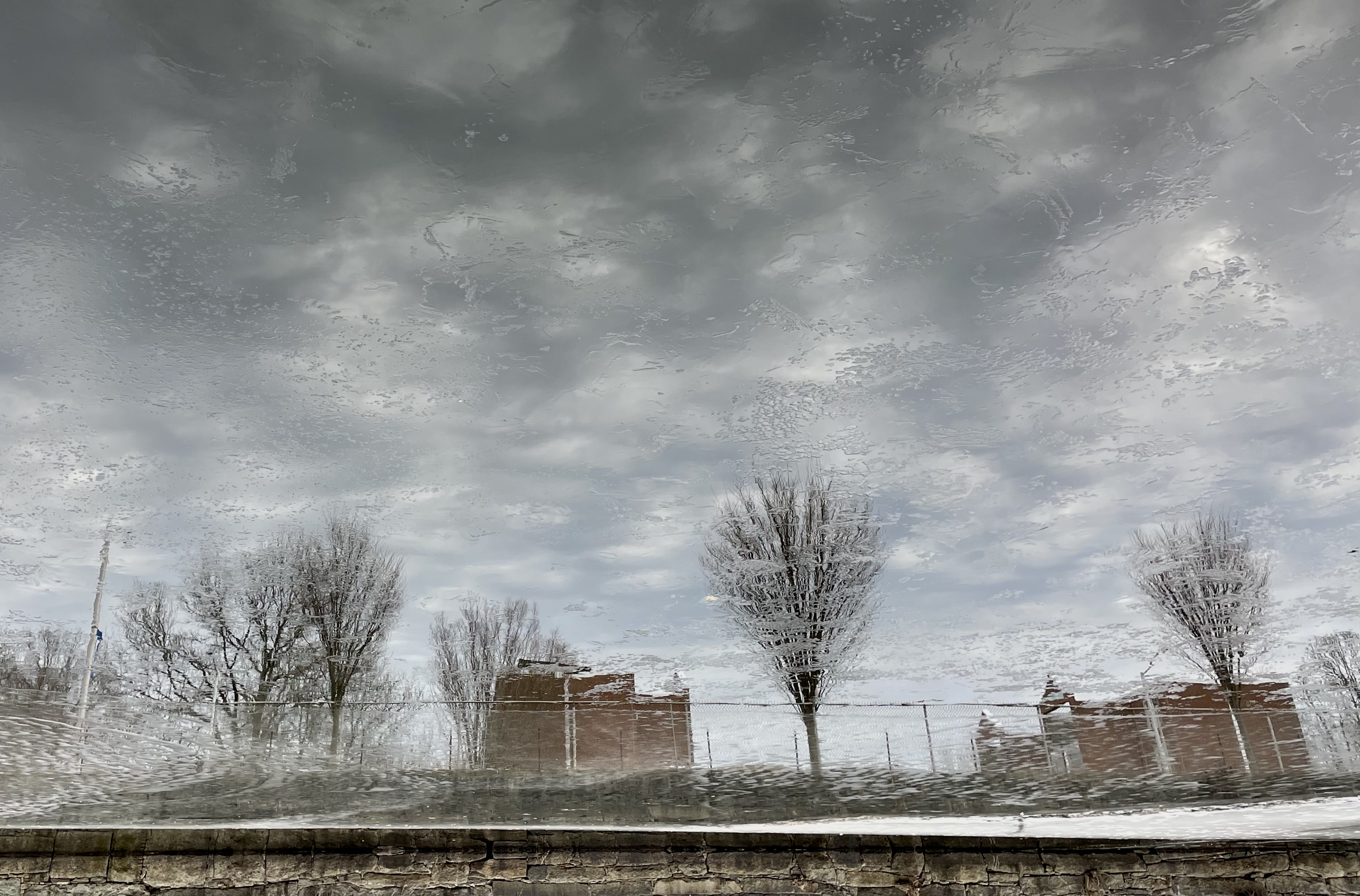
  • Topsy-Turvy, image photographed by the author
    Topsy-Turvy. Photography by the author.

    To me, retirement in the modern era, is a compromise between the career you leave behind and the pursuit of meaningfulness to fill one’s days.

    And that, for me, is what makes Anna Mary “Grandma” Moses, an incredible story. Born in 1860, Grandma Moses didn’t begin to paint until 1938, when she reached the age of 78. (read her story on her Wikipedia page here).

    When I was in junior high school, which at that time encompassed 6th, 7th, and 8th grade, our school’s art teacher would hold after school oil painting lessons. I remember being one of the students who participated in what I recall as weekly classes where we’d paint using tools I had never heard of before. Things like palette knives, colors such as alizarin crimson or yellow ochre – they were the ingredients of this magical experience. The first larger format painting I remember was of a Bird of Paradise plant painted on heavy cardboard; that painting is of course, long relegated to an incinerator.

    After I retired, I made attempts to keep my former career – education – active. I was a flawed, but fairly adequate educator, a profession that was a second career for me. But when that career ended, there was a definite period of mourning followed by attempts to put my 30 years of knowledge and experience to use in a new way. Eventually though, I noticed that the profession was so changed, evolving from what I had known it to be to something different, and at times, unrecognizable to me.

    I have been a problem solver for as long as I can remember. In teaching, when one strategem didn’t work, there were others to be tried. And so it has been with my own retirement. I needed to find a pursuit outside of education that would provide some sense of accomplishment, and this brings me back to Grandma Moses, my junior high art teacher, a long-ago foray into creating, and the present day.

    In creating my own art, mainly botanical and mostly for personal notes and cards, I am exercising the less analytical parts of my brain that I honed during my career as an educator. I’ve found a pathway away from what I was to what I am becoming.

    Choosing to learn watercolor techniques and trying to develop my own forms and design is to reach for something that is beyond where I am at this moment, but possible to attain sometime in the future. It makes me curious in the same manner that finding a pedagogy or teaching strategy used to when I was an educator.

    The trait I admire in the story of Grandma Moses and her painting, is not necessarily her accomplishment in the art world. It is that, at age 78, she found a meaningful way to engage.

  • We are vaccinated and boosted. We wear our masks nearly every place we go.

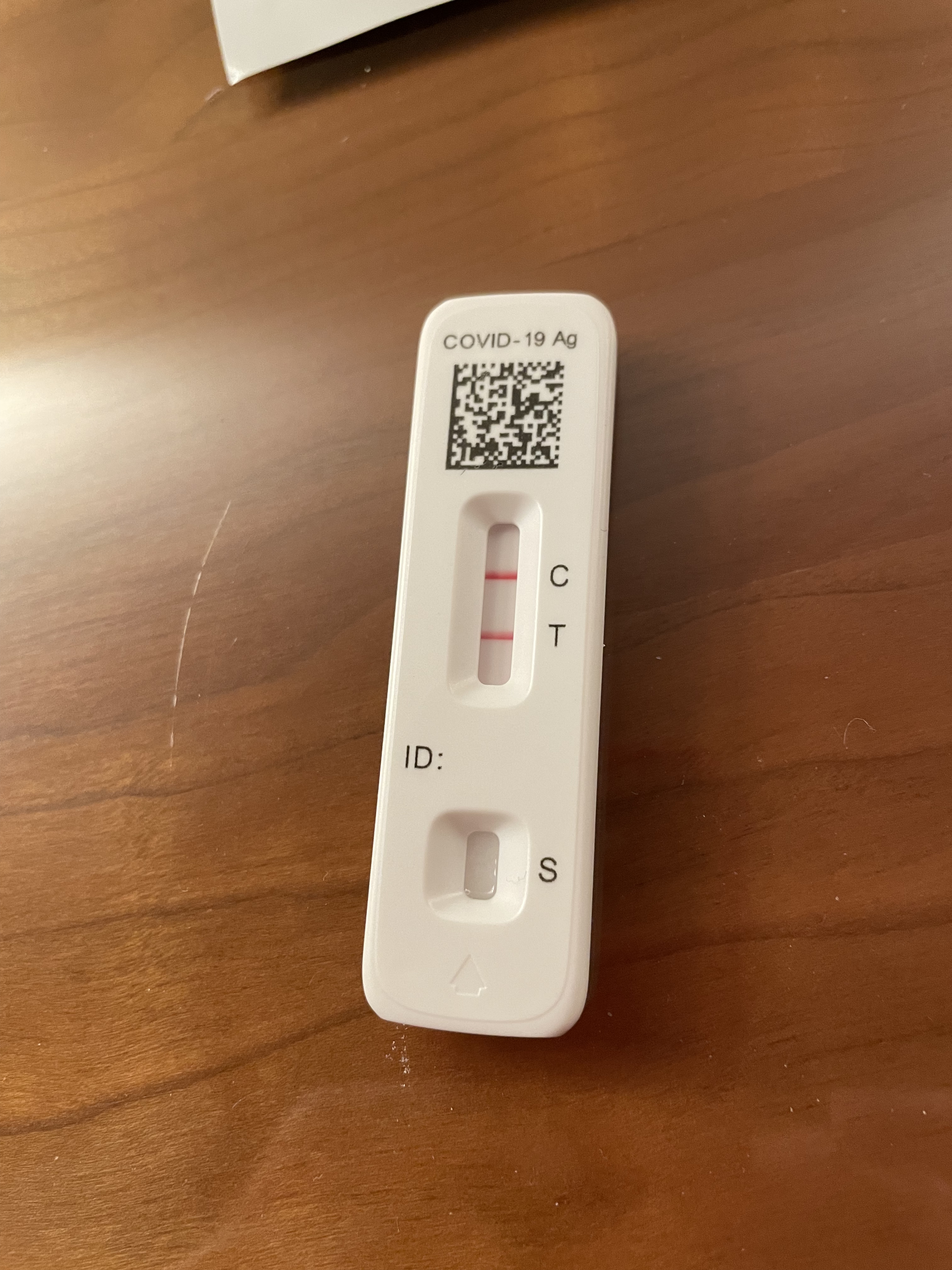
    And yet, this week I tested positive for COVID. Because of vulnerabilities of people in our circle, I mask except when outdoors or in the little-used stairwell of our building. We don’t eat indoors at restaurants and we haven’t even had an in-person Christmas celebration due to family members having one or another illness. So in my anecdotal and amateur opinion, it sure seems this latest variant of COVID is highly contagious. And not quite done wreaking havoc with some of us. 

    I may have had plans for the week, but it turns out the week had it’s own plans for me.

    Thanks to Paxlovid and the miracle of vaccinations, I have stayed out of serious medical jeopardy. The progression of this COVID variant is not a picnic and the Paxlovid side-effects are a bit of a ride. I’m pretty sure I’m experiencing almost all of them. However, it appears that I’m going to manage not being a hospitalization statistic or worse (knocks on wood, throws salt over the shoulder).

    My appreciation for those making public health decisions in Massachusetts is deep – the Telehealth consult and resulting prescription for Paxlovid were all provided at no cost. A miracle antiviral at a miraculous price.

    If those who study and analyze these things are correct, I expect there won’t be a straight line to recovery over the next week or so. There may be a rebound in my future that will throw things off-kilter.

    But, I remain thankful that medical science and access to healthcare have intersected here in my home state and have made it possible to breathe and hope for better times ahead.

  • Wishing you peace, joy, and happiness

    Adrien & Amy

  • As I start to transition from social media to other outlets for writing, I’ll be cross-posting entries here on WordPress. This is the entry from my AFTER blog written on 20 December 2022. Changes are coming – slowly. ~AEB

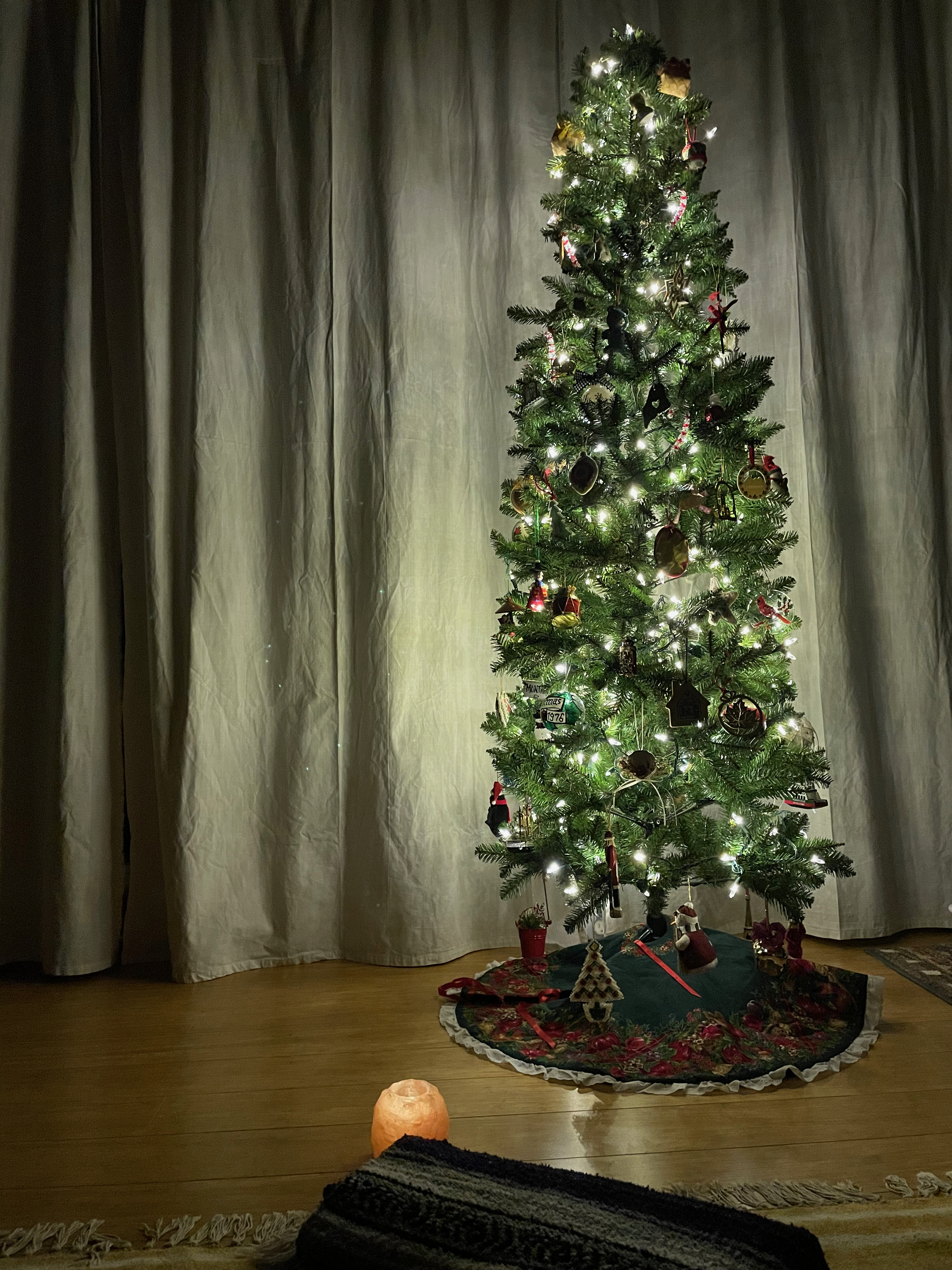
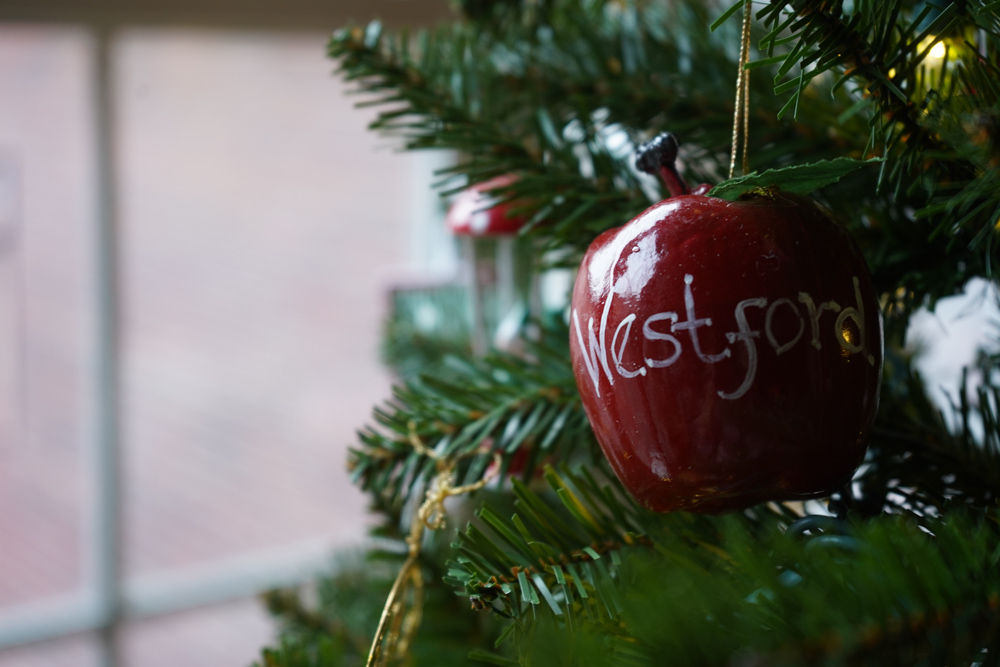
    Our holiday decor in our down-sized condo is, well…. downsized. At first when we moved from our Westford house, we did not even attempt to put up a Christmas tree. I’d attribute that to inability to locate the misplaced box of holiday ornaments and lights. And also, because we had given away our (fake) tree as we moved and downsized.

    The second year of our more minimalist life, we did buy a (real) table-sized tree. That reminds me of our first Christmas together, now 45 years ago. That first Christmas, a week after our wedding and at the start of Adrien’s semester break from Berklee, we bought a remarkably short tree at Quincy Market, a short and cold walk to our apartment on Myrtle Street in Boston. Being both newlyweds and short on cash, we plunked the tree down in a mop bucket filled with kitty litter. Good times.

    When COVID isolated us in 2020, we – meaning I – decided to once again put up a Christmas tree. This is sometimes a challenge for someone like me who is admittedly compulsively neat about home and hearth. Although I am routinely mocked for wanting to take the tree down on New Year’s Day instead of Little Christmas, putting up our tree on the third Sunday of Advent, no earlier and definitely not later, floods me with memories of Christmas seasons in the past.

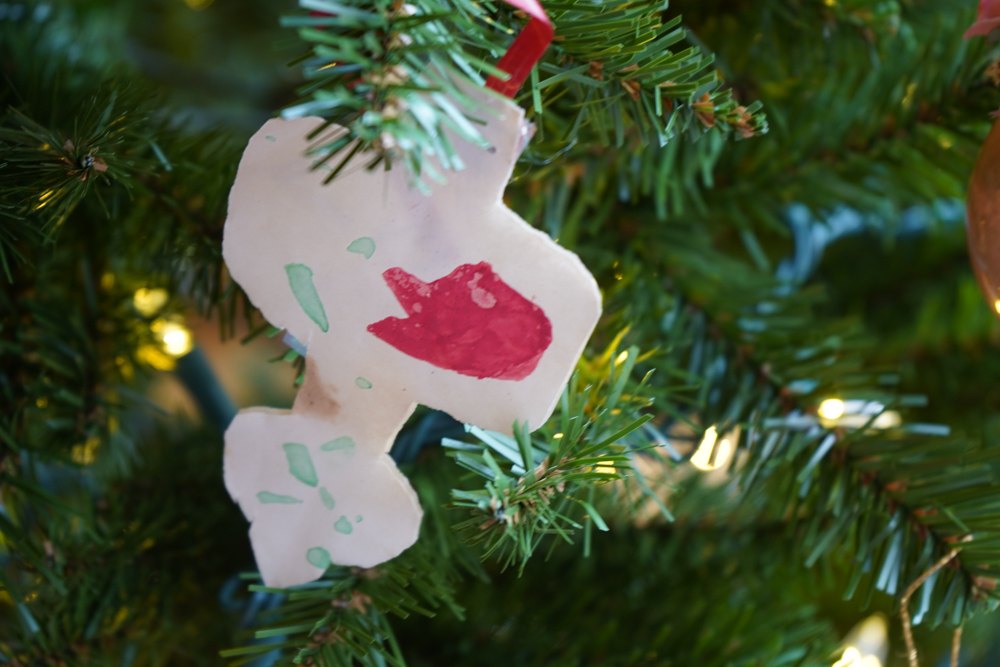
    Many of the ornaments on the tree are from former students and can be traced back to my years as a preschool aid. A number of ornaments are gifts from friends and colleagues. Some of the most cherished are ones made by our son when he was young, and now a few created by our granddaughter have been added to our collection of keepsakes.

    I also have kept an irregular collection of ornaments from year to year as souvenirs of travel. How heartwarming that is to unwrap each ornament as the tree is trimmed and be reminded of the blessings of friendships and the cherished students I have had to pleasure of teaching!

    And so during this week of Christmas and preparations, I offer to you all a season filled with the memories of friendships and the people who filled your life – and heart – with joy.

    Happy Christmas!

  • As I start to transition from social media to other outlets for writing, I’ll be cross-posting entries here on WordPress. This is the entry from my AFTER blog written on 7 November 2022. Changes are coming – slowly. ~AEB

    There is no denying that the stakes are high in the mid-term election. We’ve voted (thank you Massachusetts for Early and Mail-in options). Now we await the results of our country’s elections and anticipate with a great deal of anxiety and angst how the results will impact us all in the coming days and months.

    Despite attempts by pundits and publications, I don’t believe there is a reliable predictability to the outcome of the midterm elections. Polling? I’m a Boomer and don’t answer phone calls from people I don’t have in my contact list. How are pollsters getting the samples on which they base their conclusions?

    The bias in news reporting found on the web is well documented. I’ve stopped reading the click-bait style “reports” and have started to ignore even national news sources. It’s been increasingly difficult to locate reliable sources for topics for which I, a voter, need to find information.

    The political atmosphere and deteriorating discourse currently rampant in the United States feels overwhelming. It used to be one could politely disagree with another. So we wonder: are things worse than ever in the United States? Is this country on such a divisive path that there can be no discussion, no compromise?

    As a une femme d’un certaine âge, I wonder, is this just a perception that comes with, well, reaching a certain age. I wonder if I’ve turned into a grumpy old (wo)man incapable of change, or is this period of our history really among the most dispiriting? Having been a young adult during the 1960s and 1970s , I recognize what appear as seismic shifts in society. This feels different. And not in a good way.

    So often in my life I’ve wished I could ask my parents and grandparents about some point in history that they experienced. We are fortunate that my Mother – born in 1923 and age 99 – is still with us. So this morning we asked her for a little historical perspective

    Is life in the current times really deteriorated (politics, discourse, etc.) or is it we who have changed (senior citizens perspective)? You’ve lived through a lot of history – wondering about your take on these times?

    Her reply came in two parts; this was the first

    The short answer is yes. But certainly social media has become a way to express our thoughts and insult those with opposing beliefs with no consequences. Talk radio and talk TV also are culpable. Lying does not seem to matter any longer–It is probably true that politicians always lied, but it has become so blatant that there is no attempt to tell the truth. I am disheartened. I will vote and hope there are enough others like me who will put aside personal issues like inflation and save our democracy. Not optimistic though. And that makes me sad for Zoe and my grandchildren.

    Later this morning she offered these

    Remembering the McCarthy hearings in 1954 Many people especially in the arts were accused of being traitors to our country. It was a lawyer from Boston, Joseph Welch who called Joe Mccarthy out on his lies and misinformation. (Is it karma that we now have Kevin McCarthy who can lie without shame?) Remembering Watergate and when Sen. Howard Baker said about Nixon “What did he know and when did he know it?” He was a member of Nixon’s own party. That is what we need–people of integrity to face those with power. I think of only two today–Liz Cheney and Adam Kisinger–who are willing to do that. And willing to sacrifice their careers.

    I will cast my vote tomorrow and hope things do not go too bad and integrity wins.

    And that is what I hope will be the outcome of this midterm election. That by casting ballots, despite what could be some ugly challenges to voters, integrity will win.

  • Photo by Element5 Digital on Pexels.com

    I am admittedly a Blowellian – a blow-in to my home in Lowell, MA. Right there, that may discount any opinions I hold because I’m not “from here”. One would never guess that from my clearly mid-western dialect; I only recently stopped pronouncing a-u-n-t as /ant/.

    I am, however, able to vote and with an upcoming municipal election on Tuesday, I plan to exercise that privilege.

    As November 5th grows near, the tenor of this municipal election has turned somewhat vicious. A non-local PAC is spreading misinformation. And of course, social media plays its role in creating hostility between groups of people who hold opposing viewpoints. I’ve turned away from Facebook for the most part because of this – hopefully I’ve not missed anyone’s birthday!

    In my own mind, I’ve made my decisions as to who I will vote for City Council and School Committee. I’ve listened and read and watched voter information sessions and thank the groups sponsoring such events for their commitment toward getting actual information to voters. I also have my own set of criteria which include:

    • If I’ve contacted you and you’ve never had the courtesy to respond, even just to say “got your email”, you are not receiving my vote. This voter wants to know that you’ve heard me, even if we are on opposite sides of an issue. The courtesy of an automated reply is preferable to the dead silence of an elected official.
    • Part 2 of the above. I don’t have such a giant ego that I would expect anyone to recognize me by name, but I do expect eye contact and maybe even a nod hello when we cross paths as in you acknowledge there’s another human in your orbit. I was actually in a room where two elected officials passed right by me – the only other person in the room. One gave me the nod hello, the other looked straight ahead as if no one else was there…. guess which one I’m voting for.
    • Any candidate must be fully supportive of public education. I earned my entire education in the public schools (K-graduate school) and I had the privilege of working in traditional public schools for most of my career. I believe in them; I do not believe in privatization of public education in any way, shape, or form. If you do, we disagree and you are not on my list.
    • If you don’t immediately know enough about something, say so. The word “yet” is a powerful statement as in I don’t know enough about that YET. To do otherwise is a sign of arrogance and unwillingness to pursue a better understanding.
    • This community has changed. We need to ensure that the voices of everyone in the community are heard. I have lived a life of white, middle-class privilege and admittedly do not know a lot. If a candidate doesn’t believe the election lawsuit was overdue and necessary for ensuring all who make up Lowell are represented, you’re not on my list.

    Name calling, smears…. this Blowellian doesn’t think those pre-election activities will benefit my now-adopted city. I’ve made my list and on Tuesday, I’ll be voting. How about you?

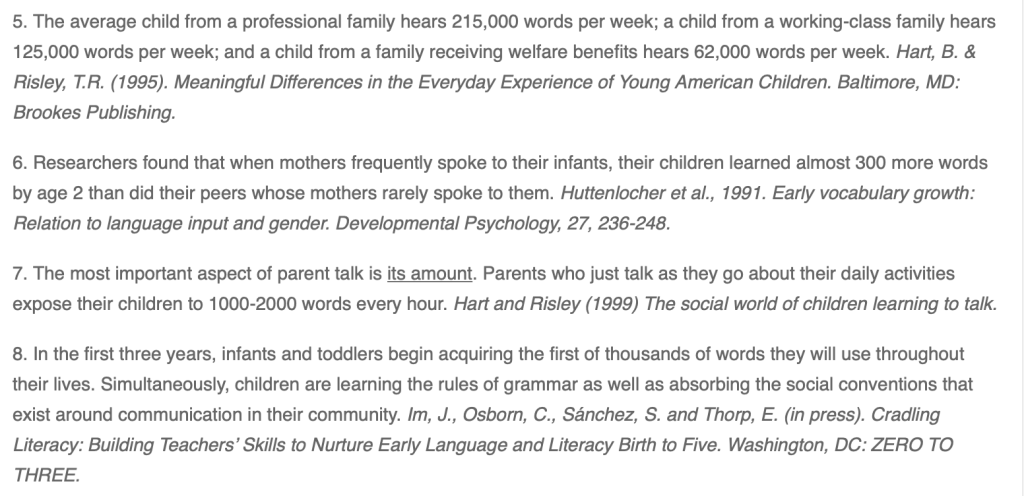
  • Fifty Top Literacy Statistics

    There has been a great deal of attention and buzz about former VP and current Presidential candidate Joe Biden’s rambling response to the education question posed at the end of last night’s debate. For the uninitiated, a record player is what we old-farts used for streaming music in our youth.

    Beyond the Friday morning commentary though are some facts that were mangled and should be given some consideration and attention. A huge gap in vocabulary and language acquisition exists between children whose families are more affluent and those who live in poverty. Children living in poverty arrive in our public schools with huge vocabulary deficits of a thousand words – and actually many times over a thousand. This is a significant factor impeding academic growth.

    The statistics cited above are ones that we, as a community and a caring responsible society, need to know and address if we are truly serious about education as a pathway for lifting children and families out of poverty.

    I’m not sure I’d agree with Mr. Biden that the solution is to turn on the television or “record player” to add more vocabulary and intuited syntactic learning about our language and literacy, but I do believe there are ways to equalize the socio-economic differences that impact academic achievement. One of those ideas I believe in is that a universal PreKindergarten experience must and should be offered to every family.

    So while the news is abuzz with talk of record-players, let’s not lose sight of the facts – the statistical facts – that our students are highly impacted by economics as well as academics, and that needs to also be part of our response to improving educational outcomes.

  • Do you remember your first day of school as a child?

    I recently came across some photographs my mother took on our first day of school in Huron, Ohio. In one, a line-up of neighborhood children are waiting for the bus. Bus Zero – Bunky’s bus. How I can even recall those details so many years later is a testament to the pleasant memories I had growing up in a small town in northwestern Ohio.

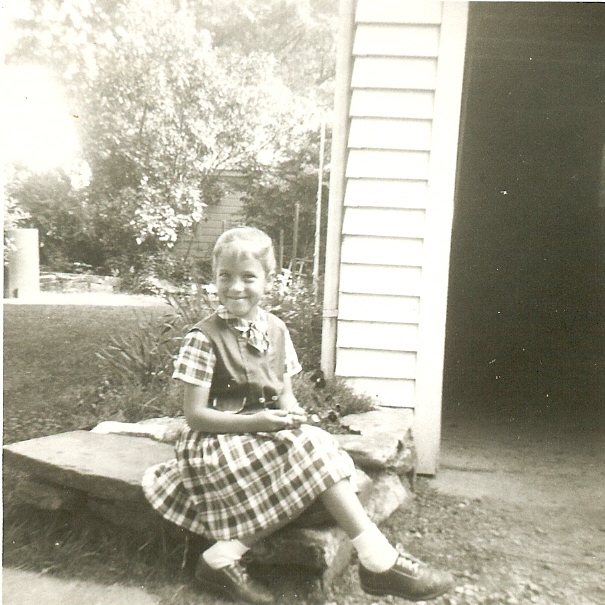
    In another photograph, the first day of third grade for me, I am sitting on a rock boarder near our garage. From that image came a flood of memories – the smell of stiff new leather shoes, a new metal lunchbox stylishly tartan plaid, hair pulled back into a tight pony tail, and of course the smell of air on a morning in September when summer fades toward fall.

    Those warm and wonderful memories are juxtaposed with the reports from Mississippi detailing the aftermath of ICE raids on the first day of school. The children of workers rounded up by ICE went off to their first day of school with all of the anticipation that encapsulates a first day of school, but those young children return home from their first day of school was not the stuff from which warm memories are created. It was nightmarish and cruel.

    Those children arrived home to uncertainty and fear. Not knowing what has happened to your parent and the insecurity of figuring out where you will stay or who will take care of you is a cruel brand of separation anxiety that is likely to scar these children for years. Acting DHS Secretary McAleenan may claim that the 680 workers were given an opportunity to use cellphones, make arrangements, released, whatever, but the reality is that did not always happen. Many questions linger including whether the cooperation – and timing of the raids – from the processing plants’ managers was retaliation for harassment charges.

    In my opinion, if our immigration and naturalization policies and laws need to address new realities, have that discussion and revise accordingly. Instilling a sense of insecurity, anxiety, and fear because it is expedient to enact a round-up of immigrant parents is cruel, and without a doubt will result in irreparable harm to the children whose first day of school in Mississippi featured chaos and anxiety.

    Massive round-ups of and raids on immigrant workers, many of whom seem to have been knowingly employed under suspicious circumstances, does not make this country “safer”. It makes our country heartless and without empathy and the collateral damage can be found in the fears of children.