• Some of my favorite episodes from Grey’s Anatomy were those in which Ellis Grey, in real life Sybil Burton, appeared.  The bristly nature of that character often led viewers to think Ellis Grey, who on the surface seemed hard and unfeeling toward her daughter, Meredith, was without maternal instincts.

    However, in one of her final appearances, Ellis’s true feelings for her daughter become apparent as she charged her with the words: be extraordinary.

    As the mother – or is it the queen? – of Room 206, I find myself cajoling students to take risks and chances in learning situations. And, unfortunately, I sometimes end up accepting mediocrity.

    Time, outside forces beyond my control, arbitrary rules and regulations, can impede the vision of what I want for “my” kids. I know that given the same opportunities that students from more comfortable, language rich environments, my students can fly, they can be successful at whatever their heart desires. They can be extraordinary.

    And for that to occur, I need to be extraordinary too.
  • Last Friday, just before we dismissed students, one of my charges folded a piece of notebook paper and slipped it into the correction basket.  I discovered it this afternoon as I did my Sunday prep for the week ahead.

    Today was the best day ever. We had popsicals (sic) and extra reacess (sic) and I couldn’t do it without you.

    On Friday, my students who had followed classroom and school rules – “stayed green” – for the entire month of September, were recognized with Popsicles and an extra 20 minutes of recess. For this student, it was the first time she had accomplished this goal since the beginning of third grade.

    No doubt, she would have accomplished this on her own. I don’t do this job for the accolades. But this note made my day. It will be a while before the grin is wiped from my face.

  • If you believe everything you read about education, you would think that public schools have been taken over by slackers only interested in making a quick buck, the “generous” benefits, and extra long summers off.

    If you truly wish to know what really happens in a public school classroom, go visit one. Seriously. And be certain you go to a PUBLIC school, not a charter school funded by the public and run by for-profit corporations. Then write about what you observe.

    So many private sector business types want to “improve” education by standardizing it. They figure that if clueless educators know what the expectations and goals are, the students will naturally perform better on standardized tests. They conjecture that making teachers accountable for the standardized test scores of their students, by quantifying a teacher’s worth with some “value-added” metric, the challenges of education will be solved. And it won’t cost a penny.

    These ideas are coming from the very same people who give themselves 6-figure bonuses, but won’t up the minimum wage.

    How I wish that those experts with the answers to all things education would step into a classroom for a couple of hours before spouting off! But then, those that don’t see a need to provide a living wage to their company’s workforce would probably not notice the child who can’t focus because food is in short supply at home, or the child who needs glasses to see, but whose parent can’t afford them, or the child whose culture and gift for speaking in a language other than English needs a more time to learn the nuances of English – the test language under which they will be assessed for the whole of their education.

    The experts and pundits probably would not see that the social challenges of families living on or below the poverty level are nearly insurmountable in this “ownership society”.  Own what, I might ask. Well unless you own a big fat CEO-style paycheck, you are basically screwed.

    It’s a lot easier to pontificate about what is “wrong” in education, to advocate for a program which just happens to provide some investment opportunity which may become a “profit center”, and to ignore the neediest of our society.

    Everyone deserves an education. That’s right. E-V-E-R-Y-O-N-E. How can this be called a civilized society if only a select few are allowed the advantages of learning?

    So if you ever want to take me up on that challenge – to see what it is truly like to teach in a PUBLIC school classroom, my door – and the invitation – is open.

  • One of the things I did for myself this summer was to enroll in an Orton-Gillingham Comprehensive training. I’d been trained at a previous school in Lindamood Bell and found that systematic phonics instruction really helped my students, particularly those whose first or primary language was not English.

    While the intensity of this training can’t be minimized, it was something life-changing. I feel so strongly that this approach to phonics will push my struggling readers to greater success.

    Why shouldn’t it? Orton-Gillingham incorporates all three learning modalities – visual, auditory, and kineshetic. And how is most direct instruction delivered? If you said auditorially, you would be correct.  Just by re-thinking how much of a lesson is delivered in each modality and adjusting has got to help.

    My first goal for the new school year has been to convince my administrators and coaches of implementing OG with my safety net readers in place of the district-preferred LLI (Fountas Pinnell). Thankfully Orton Gillingham has a built-in data collection process so that the request for collecting data as proof of the program’s effectiveness with my students will be natural.

    Yesterday, our second day of school, I taught the students the routine for learning red words, or high frequency, irregularly decoded words. Today I’ll target my safety net readers and administer the OG Level 1 test as a baseline.

    We are on our way toward what I know will be effective instruction for kids who really, really need to make sense of the print in front of them.

  • It rained last Thursday. Which isn’t really news-worthy unless you are a teacher with just a few weeks left of summer break.

    A rainy day is usually the impetus for me to start readying my classroom for the first day of school.  This year I am a bit more behind the eight ball than usual as I physically moved spaces. So lots of my stuff is not where I might have put it last spring.

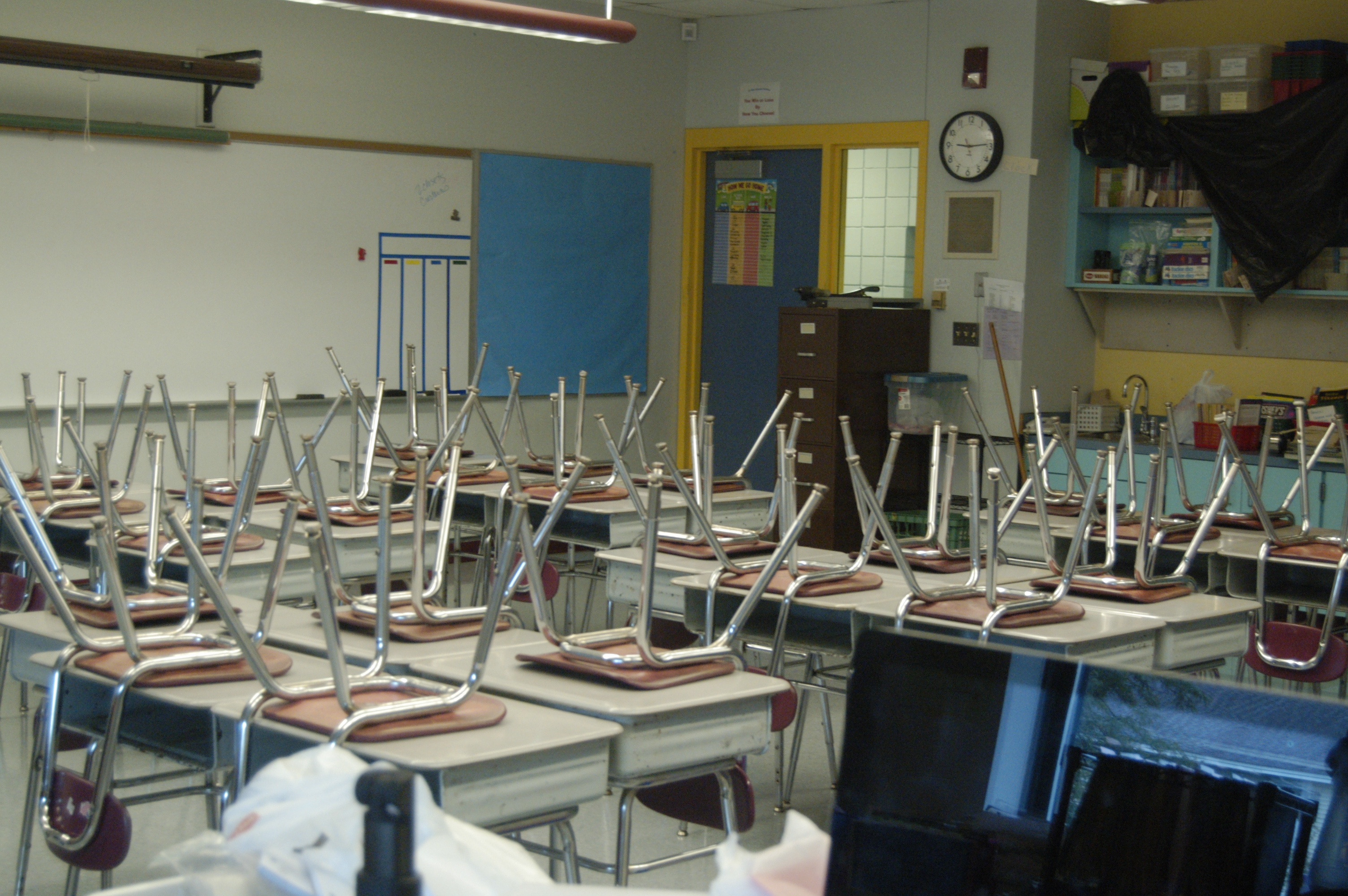
    Here’s what I walked in to:

    _DSC0001Which, of course, isn’t bad. Just not how I envisioned our classroom workspace.

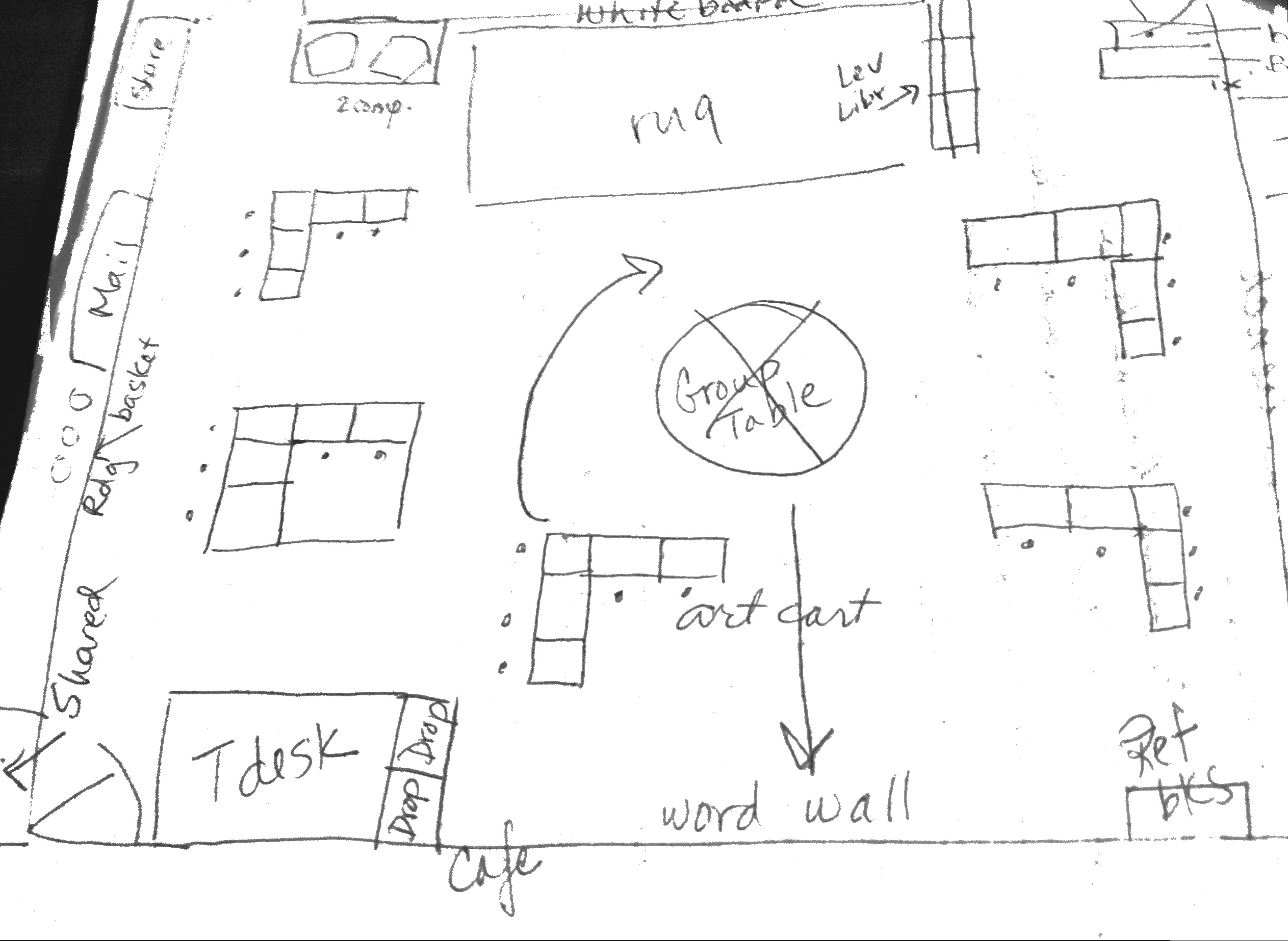
    Even in the new classroom, I will have a ceiling mounted projector, and therefore, the need to have the projector, Mobi teacher unit and document camera connected to wall drops just to the left out of the frame. Having several classroom work areas – a rug for large group gathering, desks for individual, and for technology viewing, places where smaller groups can work … all are considerations.  As I don’t sit at my desk during the school day, that item can be pushed out of the way. We have a somewhat large classroom library and many math manipulative materials that need to be accessed regularly.  It’s a lot to consider when setting up space that feels uncluttered and open.

    So with all of that in mind, I’ve sketched out the plan for our classroom space.

    2013-08-11 18-31-16

  • I recently read this post from Germantown Avenue Parents’ blog. Those behavior management tools – like the mentioned stoplight? Do they really help kids get behaviors on track?

    In my school, we are required to hang a pocket chart. Each child has an assigned number and flips cards through a series of colors – green to yellow to blue to purple to indicate the kind of day they are having.

    Who are we kidding with the numbered pockets?  It takes kids about an hour to know who is who.

    While I agree with giving students a visual reminder of their behavior accountability, I dislike having behaviors displayed publicly. Besides taking up valuable bulletin board space, it seems self-defeating.  And disrespectful.  Would you want YOUR bad day posted for all to see? Me either.

    What’s a solution to this dilemma? I have a small, portable pocket chart that served the same purpose as the bulletin board display, but in a less public way. For my more challenging students, I maintain a periodic behavior chart which gets reviewed daily (or hourly sometimes). And for the status of the class – we can still hang out our class sign indicating our classroom community is having a ‘great day’, ‘not-so-great day’, or ‘wish we could do-over’ day.

    We can still help students get behaviors back on track. We just don’t need to do it publicly.

  • This is a parallel story.

    Last year, I spent a frustrating year teaching mathematics. Frustrating because, despite what I knew to be good practice, my students’ test results were not stellar. In fact, much of the time, my class averages were below every other class on the team. In the data-driven environment in which we teachers work, that is not a good feeling.

    Still, we continued to work consistently addressing standards.

    As I prepped to close out the school year, I printed the growth report in mathematics for my students. And here was the surprise: 78% of my students had made high growth! Of the 78%, half were lower achieving, but their growth in Grade 3 had been significant.  If the growth had been high, those consistent teaching practices had been successful.

    Now the parallel part of this tale:

    This week, I had been feeling pretty low about my fitness and conditioning achievements. I belong to a fabulous gym where the owner, Sherri Sarrouf, and all of the trainers, encourage each member to be the best they can be. This is the most supportive fitness environment I have ever been part of – me, the queen of gym-avoidance; I love going to the gym!

    So I emailed Sherri and told her I had a concern that I wasn’t moving forward. And Sherri, being the caring person that she is, wanted to meet with me asap.

    Sherri had some data for me too. I had beginning BMI data taken when I first joined the gym. Sherri did a BMI right then and there. I lost pounds, I gained muscle, my metabolic age went down, fat – down. The evidence of success was right in front of me.

    I have been consistently going to the gym – mostly because it is so FUN – and the data was there to show I was making progress.

    So just like staying the course in mathematics last year, staying the course in my personal life, that consistency, had made a difference. Sometimes growth is subtle.

    Consistency = success.

  • In the upcoming school year, I will be changing grade levels and classrooms. Honestly, I am not sure which of those two is more scary – learning a new curriculum or moving my collected treasures.

    The move to a new classroom is at once exhilarating and deflating.  I do welcome the chance to vigorously downsize my collection of teaching materials. My new rule of thumb is “if you haven’t used it in the last 2 years, reduce, reuse, recycle.” Of course the corollary to that rule is “if you toss it out, you will immediately find it essential to a lesson as soon as the trash truck empties the dumpster.”

    Still, I am finding I must be merciless in my assessment of each item’s usefulness; hanging on to something I made 5 years ago just because it has an emotional investment just makes for more to move. And organize. Off and on, I’ve been moving since June 22nd, this activity is getting old.

    The moving should finish today. I have two more supply closets to transfer to my new classroom and a willing volunteer to help me.

    And maybe then I can breathe… a sigh of relief.

  • One of my not-education “hobbies” is family history.  It is exhilarating to me when I find a link to a relative, and especially cool when I can place that relative in history.

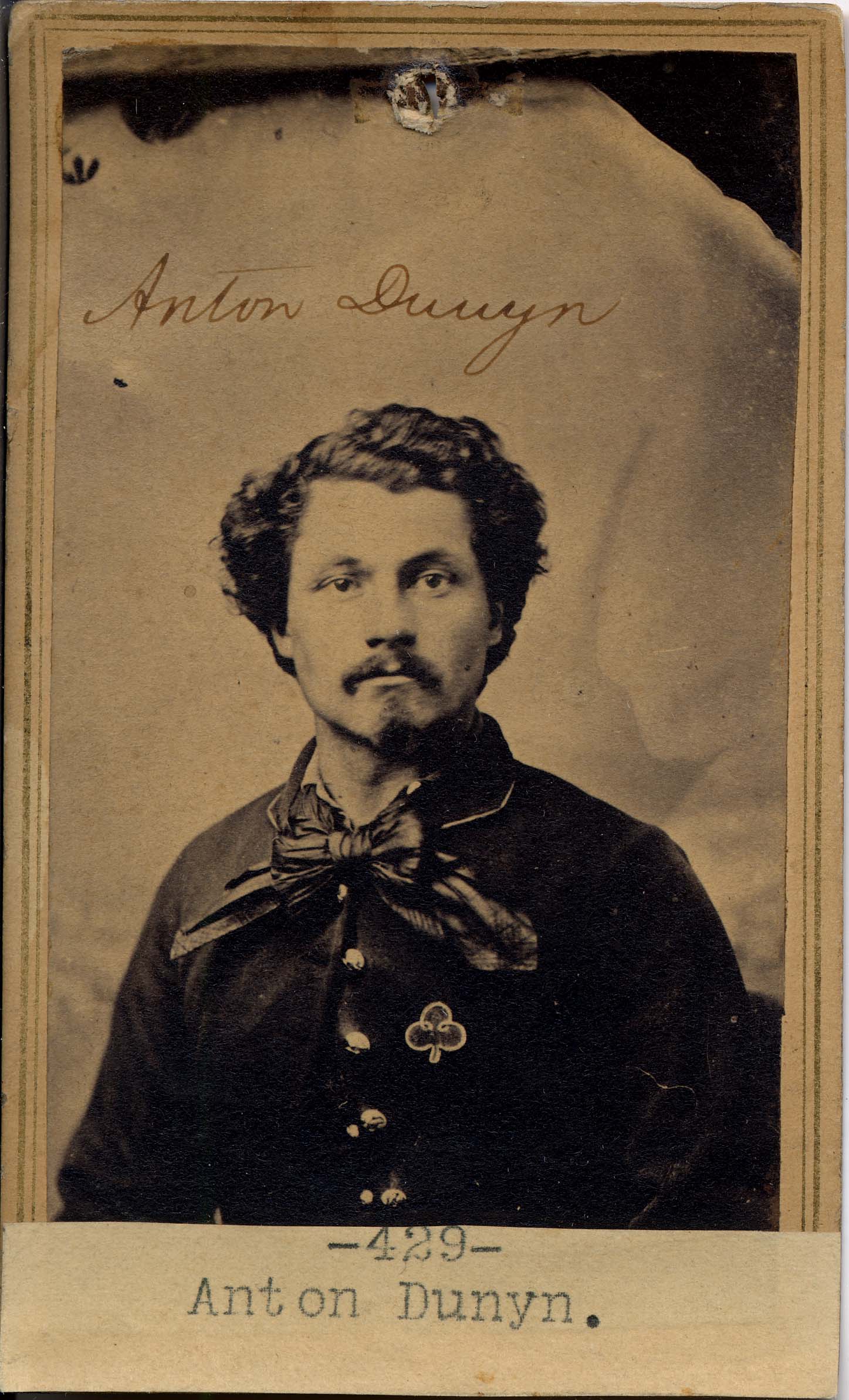
    Enlistment Photograph taken in NY in 1861.
    Enlistment Photograph taken in NY in 1861.

    I have found some relatives that fought during the Civil War – and on both sides of that conflict.  My Dutch-born great-grandfather, Anthony Duym, was at Gettysburg 150 year ago as a soldier in the New York 52nd Infantry. He was about 22 years old at the time.

    I often joke that my great-grandfather must have been standing in the back of the line for most of the Civil War; to my knowledge he was uninjured despite being in some of the more well-known battles of that conflict. 150 years ago today, his company was in the middle of the fighting in Gettysburg.

    In history class, I learned that people came out in carriages with picnic baskets to watch the battle as if it were a sporting event. How wrong that was! One of, if not the, bloodiest battles fought on US soil, visiting Gettysburg in modern times is a humbling experience.

    One hundred fifty years is a lot of time passed. It is easy to glamorize and forget the horrible parts of a battle and of a war.

    I wish I could have asked my great-grandfather to tell me about his time in the Union Army. I cannot help wondering how it changed him.

  • Like lots of teachers, I am burnt to a crisp mentally by the time June arrives. Some years, this happens sooner – usually those are the years that can be identified as curriculum change years.

    This year has been a particular challenge. You see, this year, everything was new again. I have been teaching for a l-o-n-g time and while I never teach the same things the same way twice – which makes sense, the kids are different and have different needs – one would think there would be something that would be connected to prior years.

    Not true of the academic year that has just ended. We were charged with changing our math curriculum, our science curriculum, and our English Language Arts curriculum. The level of discomfort with curriculum was pretty high.

    The amount of time preparing was off the charts. Why? Because anyone in the education field can tell you that those Grade 3-6 materials suggestions are often (mostly) directed toward students in the middle of that grade span.  In other words, we – my grade level team and I – spent inordinate amounts of time trying to find comparable materials to teach our students.

    My husband tells me that I’m a “magic bullet” kind of person. I am continually looking for the just right solution.  To this end, I discovered a great book by Mike Anderson and published by ASCD: The Well-Balanced Teacher.  If you are a study-guide kind of person, here is a link you might enjoy. FB fiends (guilty!) might like this page.

    It has been an eye-opening read. And somewhat comforting to know that there are plenty of other educators feeling the same way I do about the need to work smarter and be more balanced.  Ten months of 10- to 12-hour days does not make for a happy, creative teacher.

    Summer is a time of renewal. A time to reset those parts of my life that have gone out of balance. It is time to make change good.