• We teach students that there are consequences for their actions and choices. Well, there should be consequences for the INaction of adults as well.

    Teachers, paraprofessionals, cafeteria workers and custodial workers have been without a contract in Lowell for over 450 days. My understanding – as I am recently retired, I no longer attend union informational meetings – is that this is driven by several factors. Included in the list of factors would be cancelled and perpetually postponed meetings of the negotiating teams. That in itself surely does not indicate that contracts are of high – or actually any – priority.

    I’ve heard the reports of concessions, not the specifics. However, it is an election year; it would not be unreasonablefrontboard1 to think some who are negotiating the contracts with the Unions would like to make a grand political statement.

    With tight municipal budgets, no one is expecting exorbitant monetary increases, like the 15% pay raise I learned of for a first-year hire at a private corporation. And just as a point of interest, even retirees (not from this past June, but all prior retirees) received a cost of living raise of 3% from the Commonwealth’s Teacher Retirement Board.  (The details and the history of which are found here.)

    I am concerned by the reports of demands in the negotiations. No, I don’t know specifics, but asking for additional time (longer days? less preparation? longer school years?), giving back previously negotiated benefits, those things represent a disrespect for the talented people who make this school system one of the best achieving urban districts in Massachusetts.

    One financial impact of this is that, hard-earned pensions are calculated based upon a salary rate that has not changed for 450 days. For those who may not know, pension benefits are based on a formula which includes an average of three highest years of earning (for most teachers, that would be the last 3 years of service). Thus, the pension that recent retirees have earned will be impacted for the rest of their lives. That’s not insignificant. Nor is it fair.

    The consequence?  I am a registered voter who is doing due diligence. I am watching the field of candidates for school and city offices. The consequence of inaction, will indeed be action.

  • This week, in place of starting a new school year as I have done for the past 30 years, I escaped for a mini-break to Manhattan. We purposely timed this trip to coincide with the first days of school in hope that a distraction would, well… distract me.

    One of our days in Manhattan was a walking day. We started at the Brooklyn Bridge, walked across toward Manhattan and then through lower Manhattan to the site of the World Trade Center.

    Over 30 years ago, we visited New York and the observation tower of the World Trade Center. It was a magnificent structure and I remember feeling it sway with the wind.

    Standing on the site of the towers today, viewing the reflecting pools and WTC Memorial is an emotional experience. I spotted this poignant reminder that those who died that day just had the misfortune of going to work on an ordinary September morning, or as I discovered later by looking up this name, finishing up after an extra night’s work.

    WTC Memorial

    Rest peacefully, Norbert Szurkowski.

  • When I first began teaching elementary school, the only “independent” books kids had were the books they checked out of the library. And maybe a borrowed read-aloud left of the chalk (!) ledge. Can you imagine how boring that must have been?

    newbasketsMorphing to Reading Workshops and Daily Five gave our students opportunities to self-select books for reading independently. And of course, that was a lot more engaging for students. Kids being kids though, were they always doing the right thing at self-selection time?

    We teach kids explicitly how to find “just right” books that are neither frustrating nor so easy that kids don’t grow as readers. In my classroom, students received a readers’ license to help them remember where their proximal reading level was. (For information on how my classroom library was leveled, see The Leveled Library Project above.)

    The license included a digitized photo of the student created on one of the first days of school, the student’s name, and a color code sticker as a reminder of what just-right-level should be the current target. Students were encouraged to choose 1 book from a level down and 1 book from a level up (the challenge) as well as 2 just-right books. I usually printed all this on a 4×6 plain index card or some heavy card stock paper.

    At conferencing time, the student arrived with book box and license and we’d always spend a minute or two making sure selections were a match. New color code stickers were added throughout the year as the student progressed; we’d talk about a goal or next step to work on, record that idea in the student’s reading notebook and move on.

    Did I have students who tried to fake their way into a level because a friend was there? Some did from time to time. But I also had students who wanted to prove that they could read more challenging books. How I loved when a student was so bent on proving that higher challenging level was really “just right” that the student doubled down on effort to move forward!

    A “license” to read… just another way to track whether book choices match independent reading levels.

  • A former colleague and new-to-grade teacher recently asked if I’d share my plan book with her. I was, of course, flattered by that request and, since planbook.edu hadn’t yet disabled my account (retirement = less out-of-pocket spending), I was happy to send her a PDF of my old book. With footnotes. Why?

    Planbook in September
    Planbook in September

    Well, I realized as I looked at the attachment I was sending that throughout the year, my plan book changes in content and context. Quite drastically actually.

    Like most everyone, at the beginning of the school year, I focus on routines. The required “I can” statements and goals and objectives reflect that. Then as I begin to know the students more, those statements become more language-based and focused.  Adjustments like this are natural to see. As a teacher learns more about what the students need, the focus shifts to the academics and meeting curricular goals.

    As I flipped through the year I also noted when something that caught my attention during professional development was incorporated into planning. The structure of the day – the schedule of what happens when – morphs to fit what is more comfortable for my students and for me.

    Yes there are immovables; Special Education schedules can rarely be changed once they are set at the beginning of a school year. Still tweaking and changing to accommodate what flow is best for students is an ongoing process.

    Planbook in June
    Planbook in June

    My comment as I sent the attached plans off? Looks like by the end of the school year I finally got it right. Or at least close to something we all could live with.

    How do you plan for that? I’m thinking, you don’t. You go with the flow.

  • The New York Times has a good read today stating what nearly every educator in the U.S. could have predicted: indications showing the beginnings of a teacher shortage in the U.S. Read the article here.

    IMG_0008_2According to the author, because there aren’t enough teachers available to hire, urban districts across the U.S. – including Providence, RI right here in New England – are resorting to hiring teachers as “interns” who then are assigned a mentor (yeah!) and simultaneously complete a credentialing program at a university. Notice the word, simultaneously. That means the new teacher hired to be in a classroom has not been trained in nor exposed to such things as classroom management, child psychology, and pedagogy. Minor stuff, right?

    Here’s something that doesn’t surprise anyone teaching today. Many educators in classrooms are demoralized. The public has been convinced that educators are lazy, shiftless leeches unable to make educational decisions without a scripted lesson. Teachers are told that our students don’t “achieve” as demonstrated by high-stakes, single shot testing created by a multi-national conglomerate with questionable motivation. And our worth as educators continues to be entangled with those scores quantifying whether or not we are effective teachers without regard to other factors. Factors over which educators have no control such as the poverty and eroding support for those with many hurdles to overcome. Demoralized? You bet.

    Devalued? Well consider for a moment that the candidates who are featured in this article go through a year’s credentialing.  The amount of time spent in an induction (mentoring) program is not detailed, but anything less than three years is minimal. Personally, I feel that most of us would have benefited from five years of coaching and mentoring. So with minimal time spent learning how to become an educator and possibly minimal time being mentored to be an educator, what happens? The candidate is termed an “intern” – a technicality – so that person can fill the position while simultaneously learning to be a teacher. Does anyone see a problem here?

    Given this atmosphere, is it any wonder that there is a teacher shortage? University and college students must be wondering why incur student loan debts for a career in education. Experienced teachers who are well-prepared and, despite arbitrary ratings based on students’ test scores, effective, are leaving the profession to retire early (as I did). And others are just plain tired of being trampled on by the press and corporate know-nothings and decide to move on.

    Teacher shortage? Did anyone really expect a different outcome?

  • Like a lot of ideas, Teach For America sounds good, but in actuality? Well, that’s a decision you would have to come to on your own.  As a nonprofit, TFA’s stated slogan is “One day, all children in this nation will have the opportunity to attain an excellent education.” Who could argue with that? 2014-11-25-lincoln-024

    Creating a Peace Corps type model to work in the most needy of schools is a lofty and worthy goal. As a recently retired teacher from a school with a poverty rate hovering around 90%, I can assure you that teaching students from such backgrounds burns out even the most experienced. It is grueling, and it is exhilarating. Urban districts and other high-poverty districts need enthusiastic educators to reach students.

    What I object to is the attitude that seems to indicate if one is a stellar graduate or undergraduate in a chosen major, then one can teach without much attention paid to the art of pedagogy.  I will come right out with it – I vehemently disagree. It is insulting to assume that, the process, the science, the art of teaching seems so unvalued. A search of TFA’s website shows a “training schedule” in the range of 4-6 weeks. From the perspective of a person who spent 4 years undergraduate, 1 year graduate, countless house in pre-practicums and observations, the message seems clear: anyone can teach and we’ll show you how in 6 weeks or less.

    So why do I care? Well, recently I read a post on a professional list that I subscribe to indicating that the legislative aides of many of our members of Congress are TFA alumni. If that is true – currently I’m researching that using Members’ staff lists and Linkedin profiles – then it will be no wonder that educators and education are under-valued and looked down upon.

    Stay tuned for future posts.

  • The Daily Five Tip of the Week had a wonderful cover story this week. In it, Lori Sabo writes about the lasting impact Joan Moser had on a former first grader, recent high school graduate. In the end, the former student describes her current self through the books she loves.

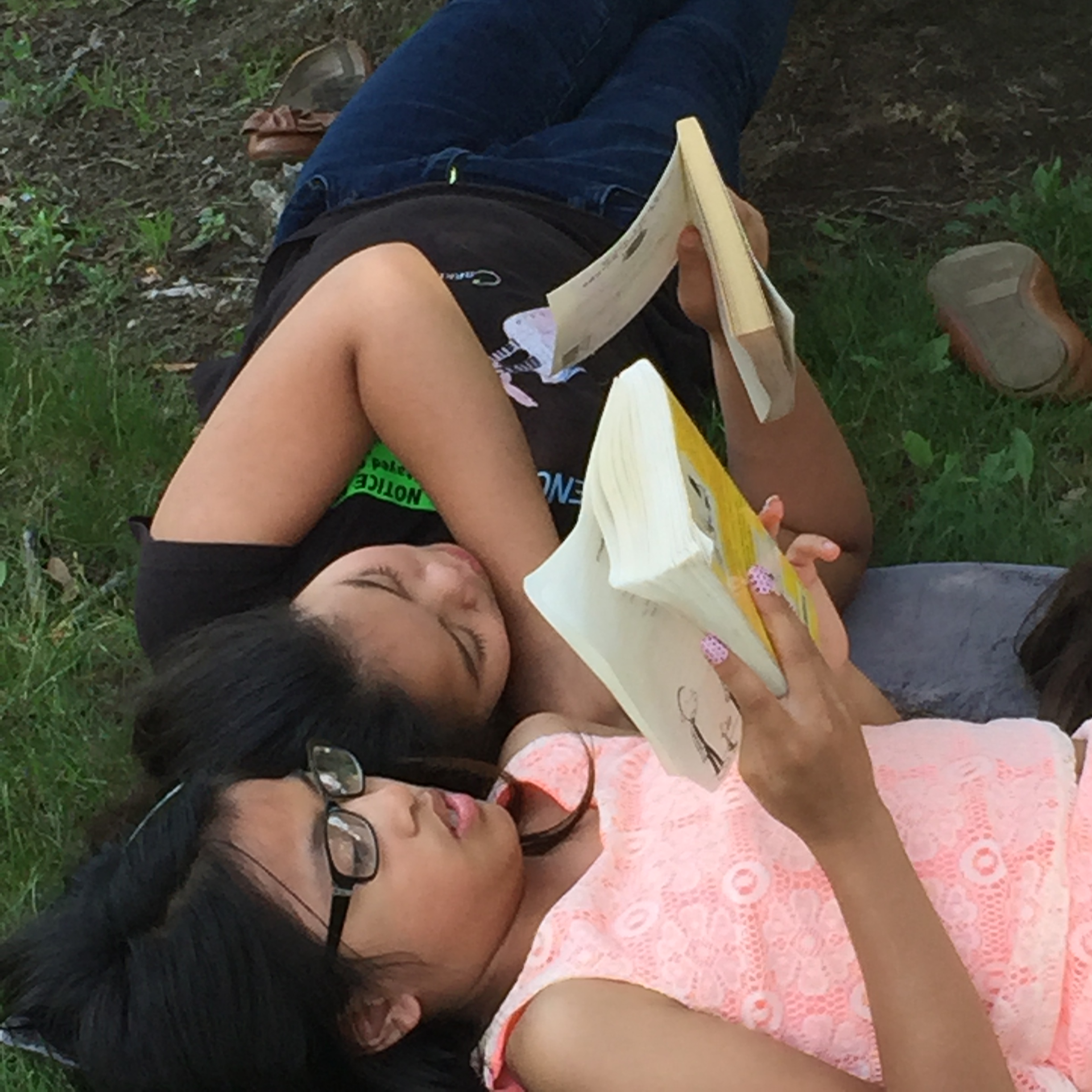
    IMG_0190Beyond the well-deserved thanks that Joan received I think is a far more important message to all who work with elementary students. What matters to elementary kids, what they will take away, is a love of learning.

    Clearly, Joan’s former student learned to love to read, not from the rigor of the Common Core (which was not part of our educational landscape 12 year ago), but through the nurturing environment created within the walls of the classroom. That environment included coaching this student through some reading challenges, instilling a sense of confidence and independence, and creating a safe and relaxing physical space to learn.

    Planning for the upcoming year will inevitably include achievement data and plans for improvement. And there will be pressure to meet incredibly (ridiculously) rigorous curricula. But, hopefully, it will also include some serious thought given to what’s important – really important – to elementary students. A place and a space in which to learn to love learning.

  • Have you read this tale of horrors published in Edushyster? Amy Berard’s post “I Am Not Tom Brady“, published on July 22, tells of how her school and school district contracted with a group of consultants to improve student engagement and teacher performance. Make that, mostly “improve” teacher performance.

    Picture an experienced teacher being “coached” by 3 experts huddled around a walkie talkie in the back of the classroom. That’s right, this Handwriting the Listis coaching, school improvement style.  Because if your school or district is targeted for improvements, there must be money for consultants – you know, consultants who have never taught, or are trying out their latest graduate school theory or something they heard from the TV experts filling afternoon airwaves.

    The group Ms. Berard posts about is from the Center for Transformational Teacher Training and the program – get this – is “No Nonsense Nurturing“.

    I don’t know, nor do I care, what the qualifications of the three people “coaching” Ms. Berard might have been, but I know this. Lawrence, like Lowell, has a very high population of students for whom English is not their native language. A teacher  speaking in phrases and incomplete sentences with robotic monotone is poor practice and modeling for English acquisition. And what can “no nonsense nurturing” offer? Nurturing without nonsense? What can that possibly mean?

    Because of high poverty levels, which, by the way, will not be fixed by employing teachers who speak like robots, urban school districts often are targets of these types of programs. Peter Greene writes of the dangers of using canned programs such as the  one described in Amy Berard’s post in the Human-Proof Classroom. (You may need to register with Education Week – free – to see the whole text). Is this the education that our urban students need or deserve? Since when is a teacher making an emotional connection with students, especially impoverished and difficult-to-reach kids, an undesired outcome?

    There are so many wrongs here. The simple fact that private, money-scavaging “consultants” are empowered to find cash flow in urban districts by offering outrageous programs such as this one, should alarm everyone.

    And if you think it can’t happen in your own school or district, think again. Amy Berard’s tale of coaching gone wrong hits pretty close to home – literally. Lawrence, MA, a school district under state receivership, is a quick 15 miles from where I live and where I taught in Lowell, MA. Be vigilant.

  • Educational leaders could take a page from one of the world’s leaders in the automotive industry.

    Lately, educational leadership types keep trying to model education after industry. One of the problems with that idea is that some aspects of successful companies seems to be conveniently forgotten. For whatever reason, leaders at national and state, and sometimes local levels don’t trust highly skilled and trained professionals to know what to do.

    Listening to “This American Life” on NPR this weekend, I learned about NUMMI which at the time of the original story was a joint venture between General Motors and Toyota. About 15 minutes in, we hear of the Toyota principle of teamwork.DSC_0447

    Elena Aguilar, a contributor at Edutopia.com,  describes the following characteristics needed by education teams in this article posted on Edutopia, Five Characteristics of an Effective School Team:

    1. a common purpose or mission
    2. a safe place to take risks
    3. respectful disagreement
    4. trust and
    5. at least one strong leader

    Forward to about the 15 minute mark in this link to the story of the Nummi Plant from This American Life. It is at this point in the story, that the lessons educational leaders need to take away from Toyota and the Toyota principle seem to intersect.

    In the Toyota model, when a team member appears to be struggling, the other team members will ask if that struggling member needs help. This astounds the visiting GM workers. In their California plant, no one offered help; instead the line manager would scold, yell or take other punitive actions.

    As the interviewees continue to tell the story, we learn about the collaborative nature of the Toyota assembly line.  If there is a problem, any member is expected to voice ideas for resolution. And the ideas are truly listened to; everyone is expected to be part of the solution. According to the interviewees, it was not unusual for a worker on the line to make a suggestion (based on their own observation) and a short time later, the suggested resolution would appear.  Imagine the power of that gesture: Your expertise and opinions are vital to our success.

    Let’s compare that with top-down educational leadership today. Teachers are told what to teach, when to teach it, how to teach it, and how long to teach it. Not much room for listening or collaboration in that model.

    As I listened to this transformational story, I couldn’t help but reflect on what happens in educational “teams” today. One must be very brave to let the schedules slip, even though the reason for missing a “deadline” (i.e., assessment) might have a basis in sound educational practice.

    So called ed-reformers emboldened by their own monetary success from their time in private industry need to take a look at Toyota’s success and perhaps their own business models. Listen to the experts who are working on the front lines; be more of a partner and less of a boss. And let the educational workplace become an environment safer for innovation and solutions.

  • A year ago, my patient spouse and I moved from an exurb to the city of Lowell, MA. Even though we lived in the center of this (formerly) small town, walking was not an easy activity. In fact the walk score for our former address was 24 – meaning most every errand requires a car.

    In addition to the advantages of downsizing at this time of our life and letting go of an incredible accumulation of “stuff”, we are thoroughly enjoying the advantages of city dwelling. There are real sidewalks here! And the walk score is 94 out of 100.

    This summer I’ve made walking around Lowell a priority. There are lots of good reasons for this, not the least of which is walking is good (and painless) exercise.

    Armed with my iPhone, I try to notice and record at least one part of my walk each day. I’m certainly not a street photographer and an iPhone does not make me Henri Cartier-Bresson, but it’s kind of a fun reminder to look around and appreciate what surrounds me.

    What follows is a compilation of walking around this historic and beautiful city. And we’re off to more places to explore.