Fear is for people who don’t get out very much.
~Rick Steves




Out of the classroom & into the universe
Fear is for people who don’t get out very much.
~Rick Steves
Meeting: Wednesday, November 4, 2015
All members present.
The day after local elections and a short agenda made for a quick public meeting – under 1 hour. The Committee met in Executive Session for an update of UTL negotiations/grievances after the public portion of the agenda.
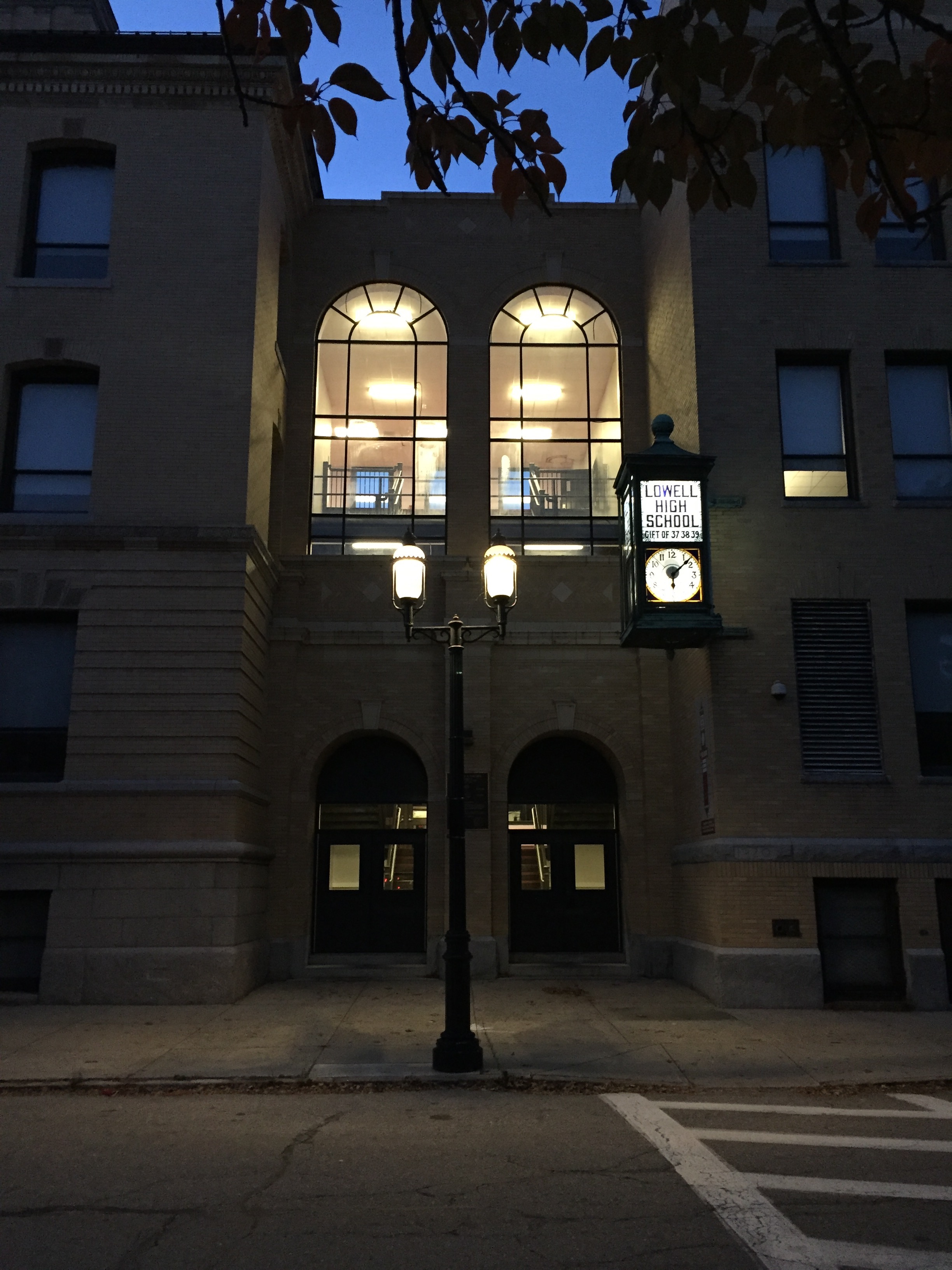 Most of the 19 agenda items were passed or accepted without much discussion.
Motions
Agenda Item 11, (2015/395) LHS Athletics – Rule 53 Waiver Request, generated some clarifying questions. The Rule 53 Waiver Request, apparently an annual agenda item, applies to 7th and 8th grade students audition for “selected” high school sports (swimming/diving, hockey). While the aim of the LHS programs in these sports is to have a feeder system through the Middle Schools, there are costs associated with these sports that make that difficult. In the meantime, 7th and 8th grade student athletes are prepared for participation through the waiver, which passed.
Subcommittees
Some time was spent summarizing Agenda Item 8 (2015/383), the Report from the Curriculum Subcommittee. The four-item focus of this meeting was:
A chart of the textbooks in use (see meeting packet) shows there is a need for new materials in the Middle School science (text 1998) and Grade 7 ancient history texts (1995?).
While individual student textbooks become more and more obsolete and the use of “multi-platform programs” becomes more frequent, curriculum focus shifts from following a teachers’ guide to teaching standards (Common Core, NEXT Science Standards, link HERE for Massachusetts standards). The conflict in this approach comes when the program authors interpret a standard; it is important to remember that program publishers such as Pearson are trying to make a profit. Sometimes the connection between an activity and an important standard can be a bit fuzzy.
In my opinion and experience, “textbooks” are becoming less of a one-book-per-student purchase and more of a curriculum or program purchase. For example, the textbooks listed for the Elementary program, my area of experience/expertise, include
Adequate and in-time professional development/training will be the key to success with these programs. For the lessons to be successful, teachers need to anticipate and prepare materials (the FOSS Kits for example take hours of teacher preparation). Educators also need to be thoughtful about how the individual students in the classroom will need to be supported. While the LPSD provides some trade books for teaching lessons, it was often my experience that these books, referred to as mentor texts, came from teachers’ personal finances. The school district as a whole needs to continually review the effectiveness of the programs for our students in reaching standards. Notice I didn’t say passing a test.
A second subcommittee meeting’s notes, Personnel, and Agenda Item 13, addressed Dr. Khelfaoui’s evaluation. Dr. Khelfaoui’s evaluation tool is directed by the Massachusetts (DESE) Department of Elementary & Secondary Education regulations, however, the specific professional and student goals are his own and were accepted.
The link to the meeting packet can be found here.
This is a local election day in Lowell, MA. Both City Council and School Committee representatives will be decided upon by the end of the day. Local pundits are predicting a low turnout, and I for one hope they are totally off base. Not exercising your right to vote is something that I just don’t understand. Don’t people want to have a voice in who represents them?
 In the late part of the 19th century, women and especially married women had little in the way of citizen’s rights and they most certainly could not vote or hold office. While unmarried women could inherit money, married women could not. I’ve been reading the history of women’s voting rights in one of my ancestral heartlands, Missouri, and while this is Missouri’s story, there are probably many commonalities with other states.
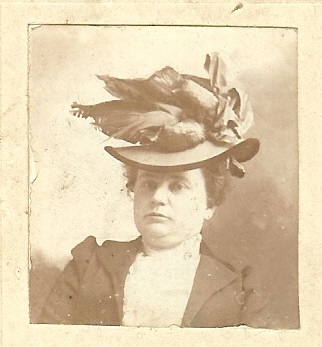
My great grandmother, Minnie Palmer Flournoy was made a young widow in 1891 when her husband Richard was killed in a tragic train accident. As a widow with two very young children, she had to fight the railroad through an attorney to get a settlement for Richard’s untimely death. I have that correspondence in my genealogy files. If memory serves me correctly, she received the princely sum of $500.
When women of Missouri demonstrated for the suffragette movement, my great-grandmother was part of that. I often have wondered if her motivation and support for the 19th Amendment could have had its beginning in the treatment she received from the railroad when her husband died.
Nearly every time that I vote, I think of the courage my great-grandmother had to muster to participate in the suffragette marches. I am grateful, but also awed because women like Minnie Flournoy had the extraordinary courage to demand the right to participate in our representative democracy. They did not give up on this idea even when the measures were defeated as they were several times in Missouri.
This morning I voted as I have on nearly every Election Day since I was old enough to do so. To do otherwise would be a disservice to those women who recognized a wrong that needed to be made right.
This morning, I was greeted by more “alleged news” (thanks Jack Cole for THAT gem) purporting that “Educators Urge State Board to Adopt PARCC Exam“. Despite the fact that this news is sourced in the Statehouse News Service and, therefore, just a press release unworthy of front page space, I call baloney. Here is why: 
Why in the world does Massachusetts continue to entertain alignment to PARCC? I have no idea.
 What follows are some highlights from a very lengthy School Committee meeting. In place of a bulleted list of meeting agenda items (the meetings are televised and rebroadcast by LTC), I’ve included some explanatory commentary. Why? Education issues are often fairly complicated; we use too many acronyms and assume what is obvious to those of us who live in the educational world is just as obviously clear to those who may not.
I decided to make School Committee Meeting commentary part of my education blogging for several reasons, the main purpose is to clarify why we should all care about and pay attention to local decisions impacting our schools. When we all understand the implications of decisions and work together to support Lowell on the path to becoming one of the great urban school districts, everyone, but especially our children, benefits.
So here is my first offering, a synthesis of the major points of the meeting.My own opinions are highlighted in italics. If you have suggestions and or commentary that might make these posts more informative and helpful, I welcome them.
Meeting Wednesday, October 21, 2015
All seven committee members were present for this meeting. The Spotlight on Education portion of the meeting highlighted the achievements of the Kindergarten through Grade 8 Summer Math Program.
One of the first agenda items to receive close attention was Item 7, a motion to go on record in opposition to the PARCC Tests (Partnership to Assess Readiness for College and Careers) by Steve Gendron. After discussion, the committee has decided to approve communicating opposition to PARCC with a “friendly amendment”. The operative words “at this time” expressed the reservations discussed: namely that the PARCC will be very expensive in terms of time and equipment and, at this writing, those expenses seem to fall on local school budgets. I have previously written about my own concerns regarding PARCC tests and will reblog those posts separately.
As the Lowell Schools, and most of the schools across the US, are currently tying curriculum to the Common Core Standards, there could be a perceived disconnect between the curriculum (Common Core) and the standardized tests (MCAS, PARCC and Smart-Balance used in some states). This is a complicated issue as the Common Core standards themselves are controversial, and there are efforts underway to return Massachusetts to prior curriculum standards.
Additionally, Mitchell Chester, Commissioner of Education (DESE – Department of Elementary and Secondary Education), just this week suggested the PARCC could be replaced by a hybrid of the MCAS (current) assessment system. (see link to Commonwealth Magazine). This hybrid is referenced as MCAS 2.0. It is unknown whether MCAS 2.0 will just look like a mildly reworked PARCC, thereby not making any substantive change. Mr. Chester is also head of the PARCC Consortium, a group formed to advance the use of this test throughout the US as a way to test Common Core standards. In my opinion, if even the Commissioner who has a bias toward adopting PARCC, is abandoning this assessment, there is reason to question whether or not to adopt it at all.
As for the expense of PARCC implementation in Lowell, there are several factors. The technology infrastructure was overloaded last year when a pilot, or small group of schools experimented with the test administration on iPads and laptops. Additional technology infrastructure and hardware would be required. Estimates are currently in the $2 million range. That’s $2 million that Lowell does not have laying around. In the words of Mr. Leary, the state (or feds) need to “fund the mandate”.
Newcomer Programs and Additional ELL Teachers
As an urban district, it is not a surprise that Lowell has a rather large population (29%) of English Language Learners which include newcomers. Mr. Leary noted that the newcomer program costs were reimbursed (by the state?) at about a 50% rate, leaving the City and School Department budget to come up with the rest. Given the 29% ELL population, the shortfall numbers will not be sustainable and will impact other budgetary items and programs.
The School Department prepared a detailed rationale and analysis of the need for assistance and issued a letter to our congressional representatives at the federal level. The Committee has requested that Dr. Khelfaoui and his administration continue to keep the need for (financial) assistance on the minds of legislators at both state and federal levels and perhaps work in coordination with other schools in similar circumstance to bring this to the forefront.
In a related agenda item, Lowell Schools have requested 5 additional ESL (English as a Second Language) teachers to support the mandated 45 minutes per day support for higher performing ELLs (English Language Learners) and 90+ minutes per day support for early English acquisition students. Performance levels are tested and tracked via yearly testing. Note: All classroom teachers are required to have an “endorsement” on their teaching license that they have been trained in differentiation techniques for ELLs. An ESL teacher has more specialized training to help students acquire English skills needed in content areas, for example.
The School Committee supported this motion; the funding for the 5 positions will be presented at the next meeting. Funding is pending approval at the state level to transfer money from an Early Childhood revolving account.
Other Agenda Items
Two other agenda items were discussed more thoroughly: a motion from Kim Scott to address quality of food in the cafeteria (including returning to in-house food services) and a review of the District finances.
As the contract with Aramark is expiring this year, the Committee members would like to survey students and families about the food quality, and review Aramark’s performance ahead of any decisions to renew or revise the food services contract.
A review of the budget expenses by Mr. Antonelli revealed that the district has expended or encumbered about 18% of the budget and this is considered within the normal range of operations. There is a concern, however, that the budgeted amount for insurance will show a deficit by the end of the fiscal year. This seems to be due to more employees choosing the indemnity plan. When questioned further, Mr. Antonelli explained that the budgeted amount is derived after consultation with the City CFO and generated prior to the Open Enrollment period when employees choose their insurance plan. Therefore, while the budgeted amount may be a “best guess”, there are factors which can cause it to be inaccurate.
The agenda and meeting packet for this meeting can be found at this link.
These are my notes from the Strategic Planning Launch held October 14, 2015. (Lowell: Imagine Our Future Public Meeting). The meeting was held in the Burgoyne Theater at LHS Freshman Academy. In attendance were many school and district administrators, at least 2 current school committee members along with several candidates for school committee, parents, teachers, UTL leadership, community partner representatives, and interested community members.
Continued public input is solicited through an online survey (link here).
Those in attendance were welcomed by Jill Lang, Freshman Academy Director, followed by presentation of colors by the LHS JROTC and the Star Spangled Banner sung by members of the LHS Chorus. Superintendent Khelfaoui welcomed the attendees and translation of this message was provided in several languages.
A video created by LET Channel 22, What Makes Lowell Schools Special, was shown to introduce those in attendance to some of the positives in the Lowell Schools. Hopefully, Central Office can make this video available to the public on a YouTube channel or link to LET22.
Superintendent Khelfaoui explained the purpose for creating a strategic plan: to develop a multi-year strategic plan for continued growth and development of the Lowell Public Schools. The resulting plan will be developed through a series of public and issue-focused meetings which will include all stakeholders in the Public Schools. These stakeholders include: Administration, Faculty Members, Parents/Guardians, School Partners and interested community members.
The inclusionary goal is to encourage people with diverse perspectives from throughout Lowell to participate in surveys, focus groups and committees. Dr. Khelfaoui cited his work in the Arlington (VA) Public Schools in this area (see link). Part of the strategic planning process, data analysis, has already begun through the LPS Leadership Academy (administrators). Claire Abrams (Assistant Superintendent of Curriculum, Instruction and Assessment) and Jeanine Durkin (Assistant Superintendent of Student Services) explained the types of participation and time commitments that will be needed over the next months (late October through Spring 2016) in order to develop a strategic plan. The final version of the strategic plan will be presented to the School Committee. These are the four ways in which stakeholders might participate:
Attendee were invited to complete this survey (link here) and indicate any level of participation they were interested in. If you were unable to attend the meeting, please use the survey to voice your opinion/preference and willingness to participate in the future.
The evening ended with a well-appreciated performance by the LHS Band.
 As noted previously, the Commonwealth’s Joint Committee on Education has taken up a discussion on whether or not to raise the cap on Charter Schools. While I worked the entirety of my career in a non-charter environment (10 year private schools, 20 years public), I do have a bias on the topic. It concerns me when a corporation, such as Sabis or Kipp, runs the school. It concerns me that the funding of corporately managed charter schools comes from a local cash-strapped district. And it concerns me when the make up of the student body is not a mirror of traditional public schools in the same district. When charter schools adhere to what was their initial charge – to become incubators of innovations in education and to share their findings – that is a good reason to engage with charter schools.
Suzanne Bump, Massachusetts State Auditor, testified before the Joint Committee this week. She was not testifying to encourage or discourage lifting the cap. The State Auditor wanted to exam the claims that counts of students on waiting lists were inaccurate, that there are inconsistencies in charter renewals, and the charge of lack of collaboration between public schools and private schools. Here are her words:
It had been my hope that an audit would examine not just the topics I mentioned. Another goal had been to get meaningful, unbiased, and complete data so that when this annual debate next took place, you and the public would have access to more facts. I have long believed in, and as State Auditor am committed to, the notion that better information makes for better public policy.
We especially wanted to know whether the student bodies of charters shared the demographic characteristics of the sending districts, as the law requires, and whether there were measurable differences in the academic outcomes of the competing systems.
And the result?
As the audit indicates, however, we could not answer those questions because we found the data collected and published by DESE to be unreliable.
Is this the very same “data” that the Governor used to plead for increasing the cap on Charter Schools? Data that the State Auditor characterizes as “unreliable”?
Please, please, please read the two-page remarks for yourself. My data mantra has always been “garbage in, garbage, out”. That surely seems to apply here and it is not a good basis on which to make important educational decisions.
One final quote from Ms. Bumps’ remarks, sums it up:
This is the 21st century. We have the brain power and we have the ability to get the information necessary to inform our decision-making, so let’s base decisions about the future of our kids, our economy, our society on facts
Yes. That is exactly when data matters.
Here’s a quote attributed to Governor Baker’s testimony during the hearings to lift the cap on Massachusetts charter schools:
We should celebrate their success and build on it
I could not agree more. Surely good practice and innovation needs to be celebrated and built upon. However, I wonder who the Governor is referring to with the word their in his statement. Surely he can’t mean only Charter Schools are experiencing success that can be built upon. I refer local readers to the Murkland School in Lowell, whose success in turning around from Level 4 to Level 1 has been nationally recognized.
 In this YouTube clip, the governor indicates that among most successful (by what measure?) schools in the Commonwealth are Charter Schools. Where is the data for this? Does this statement mean all Charter Schools are successful simply because they are not traditional public schools? And what measure is being used to assess success? Because if the single measure for success is a high-stakes test such as the current MCAS test (or the PARCC in the future), that opens up another challenge. Is a single-shot, high-stakes standardized test the only way to measure educational success?
According to the Governor and news reports there are in excess of 37,000 students across the Commonwealth on waiting lists to enter Charter Schools. Again, where is the data for this? And why are news outlets not challenging the Governor for this data?
Before a cap on the number of Charter Schools is lifted, answers need to be provided. Decisions must be based on real facts, not anecdotes or fuzzy thinking.
Recently, a local FB group had an interesting discussion about cafeteria food and time allotted for student lunches. Most of the comments noted amount of food wasted, what was consumed, and how long students had to eat. Full disclosure: I retired from teaching in June and, while I no longer observe these things first hand, I am fairly certain nothing has changed in the last six months. 
Many posters and parents noted that their child(ren) are allowed just 15 minutes to a) arrive at the cafeteria, b) make it through the food line, c) eat and d) clean up for the next group. Unfortunately, this is pretty much the norm in most schools. My fourth graders had that same timeframe for their lunch experience last year and the year before that. Although it didn’t happen too frequently, there were days when the line in the cafeteria was so slow that the kids were just sitting down to eat when I arrived from my own lunch break to pick the students up.
What would be a reasonable time for student lunches? In a newsletter from Harvard School of Medicine titled Why Eating Slowly May Help You Feel Full Faster (link here), outlines why and how, but the short answer? 20 minutes. So those 15 minute allocations for the cafe experience are already 5 minutes short on the eating end.
The whole time-on-task environment is overtaking the educational day. It takes away the teachable moment, the socialization of recess, and now healthy eating habits. Can’t someone come up with an out-of-the-box solution so kids can at least eat the food in front of them?
Thoughts?
So this week’s head-scratching story of Ahmed Mohamed and his engineering project, a clock, brings us to the” why”. As in why didn’t anyone recognize the use of a circuit board to make a clock in a high school engineering project. 
There are, of course, the deeper, darker parts of this story. Prejudice, poor judgements, all had a large role in this student’s treatment. Deny if you must, but had this object been a real incendiary device, the school would have evacuated immediately without waiting around for someone to make a definitive call on what it was.
But there is, for me another undercurrent that impacted this event. Why didn’t the school, i.e., the teacher, recognize that this was not a bomb, that it was a physical science/engineering project?
For most of the last 20 years that I taught in public schools, science was not part of the school day. That’s right – no time for science. Or social studies. Several years ago, there was a superintendent in my school district who told us to teach science through reading. Seriously. Sorry kids, no explorations for you.
Time in the day that might have been spent teaching science or social studies was allocated to improving reading, writing, and math scores. Or test preparation. To be fair, districts have begun to recognize that teaching science and social studies is essential to a good education and so, for the last 2 years, we have had district mandates for including actual science and social studies (experiments, labs, simulations – not “just reading about it”). Schools struggle to incorporate STEM and STEAM and social studies into school days, but the damage of ignoring these subjects has already been done.
Is there any question that, after 20 years of being ignored, our students – some of whom are now teachers – don’t have a basis in science to recognize when a clock is just a clock?
 After An Educator's Journey